Hypothyroidism and blood glucose.
You’re doing the work. You’ve cut the sugar, you’re walking after meals, you’re taking your medication. But the numbers aren’t moving the way they should. Something feels off — and nobody has explained why.
There’s a good chance the thyroid is part of the conversation that was never had with you.
Important before you continue: If you have been diagnosed with hypothyroidism and are currently on thyroid replacement therapy such as levothyroxine, or if you are managing blood glucose with insulin or sulfonylureas, please consult your doctor or pharmacist before making any changes to your diet or lifestyle. Both conditions affect each other in ways that require medical supervision.
How Your Thyroid Affects Blood Glucose and Metabolism
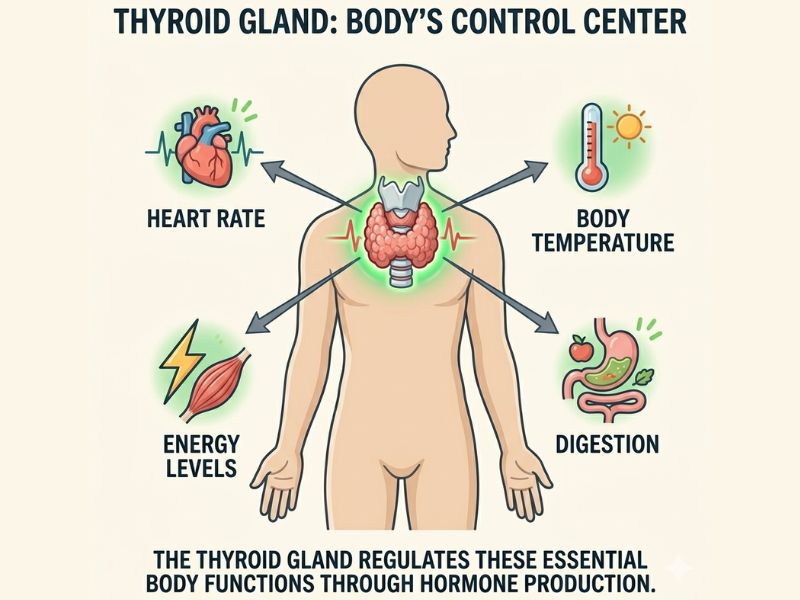
Your thyroid sits just below your Adam’s apple — a small gland doing an outsized job. It manufactures two hormones, triiodothyronine and thyroxine — known as T3 and T4 — and between them, they set the pace for nearly every process in your body. Every cell in your body responds to thyroid hormones. Heart rate, body temperature, digestion, and crucially, how efficiently your body uses energy — all of it sits under thyroid control.
Think of it as the dial that sets the pace for everything else. When that dial is turned down — which is what happens in hypothyroidism — your entire metabolism slows. Consequently, processes that depend on speed and efficiency start to fall behind.
Furthermore, this isn’t just about feeling tired or gaining weight. The slowdown affects how your body handles glucose. And that’s where the connection becomes impossible to ignore.
The Hypothyroidism and Blood Glucose Connection
Hypothyroidism and blood glucose are linked through a mechanism most people — and many healthcare providers — never discuss openly.
When your thyroid is underactive, your metabolism slows down. As a result, the rate at which your muscles take up glucose slows. The rate at which insulin does its job slows. Even gut absorption slows — but the main problem is that glucose clears from the blood more slowly because the cells aren’t opening their doors.
In other words, glucose lingers in the bloodstream longer than it should — not because you ate badly, but because the system that clears it is running in low gear.
Therefore, if you are managing prediabetes or early Type 2 diabetes and your thyroid function is suboptimal, you may be fighting two battles simultaneously without knowing it.
Why Glucose Clears More Slowly When Your Thyroid Is Underactive
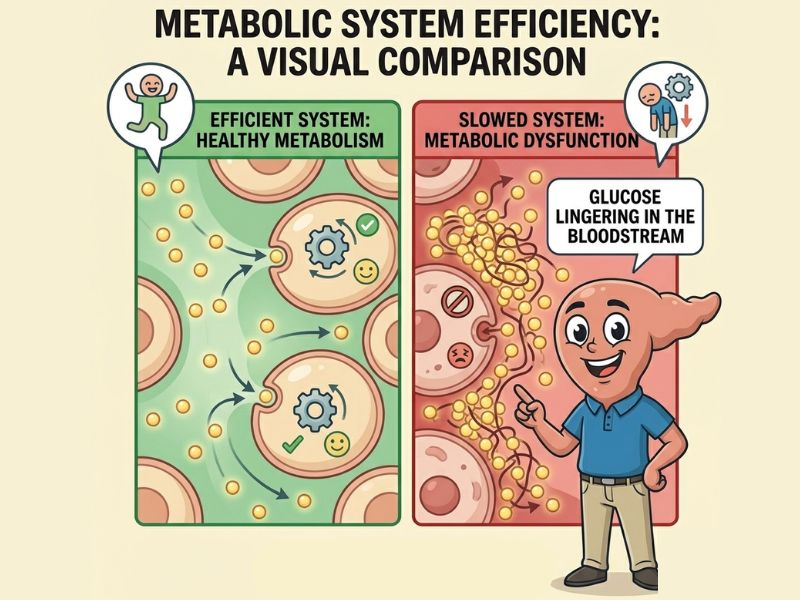
Glucose clearance depends on insulin sensitivity — how well your cells respond to insulin’s signal to absorb glucose. Thyroid hormones play a direct role in maintaining that sensitivity. However, when T3 and T4 levels drop, the cellular response to insulin weakens. Glucose uptake slows. Blood glucose levels remain elevated even when insulin is present and doing its best.
This is not a willpower problem. It is not a diet failure. This is biology operating exactly as it should under the circumstances — the circumstances just haven’t been fully explained.
How Hypothyroidism Makes Insulin Resistance Worse
Insulin resistance is already the central problem in prediabetes. Your cells have become less responsive to insulin’s signal, so glucose builds up in the bloodstream instead of being used for energy. Hypothyroidism adds a second layer to this problem.
How Hypothyroidism and Blood Glucose Are Linked at the Cell Level
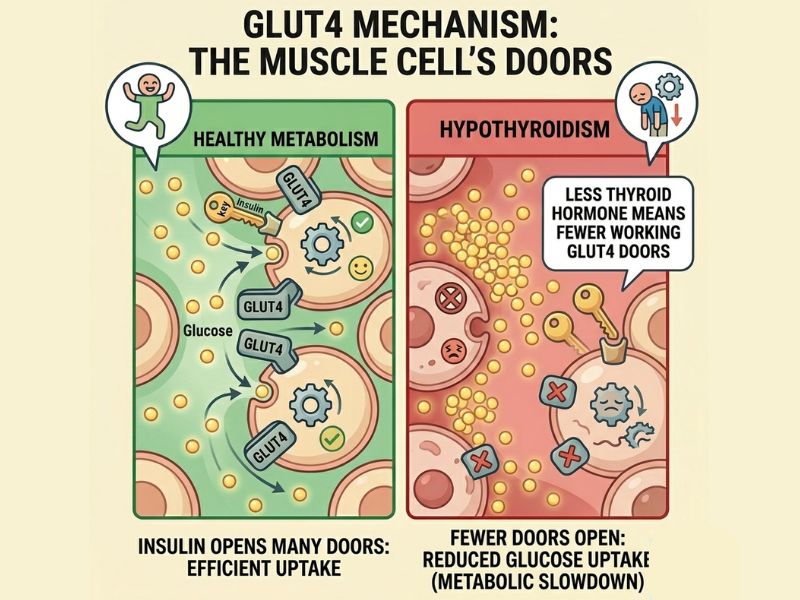
Thyroid hormones regulate the expression of glucose transporters — specifically GLUT4 — on muscle and fat cells. These transporters are the doors through which glucose enters the cell. When thyroid hormone levels are low, fewer of these doors are open. Consequently, even when insulin is knocking, fewer cells are answering.
Furthermore, hypothyroidism increases LDL cholesterol and triglycerides, both of which worsen insulin resistance. The metabolic environment becomes increasingly hostile to blood glucose control — not because of anything the person is or isn’t doing, but because an underlying hormonal imbalance is going unaddressed.
Similarly, cortisol dynamics shift in hypothyroidism. Reduced cortisol clearance means cortisol can run relatively higher — and the already-established connection between cortisol and blood glucose makes that a problem worth knowing about. The system that was already under pressure gets another weight added to it.
Symptoms of Hypothyroidism and High Blood Glucose — Why They’re Easy to Miss
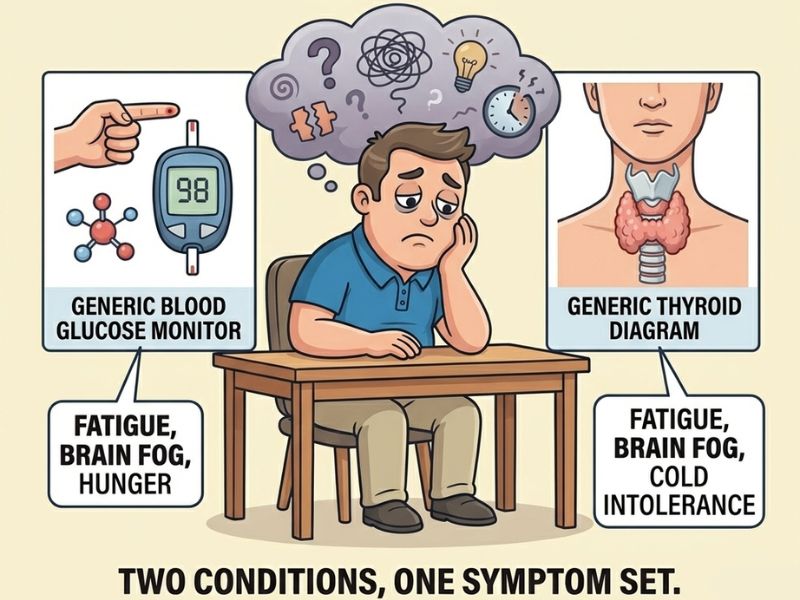
This is where it gets genuinely confusing for anyone trying to manage their blood glucose.
Hypothyroidism and insulin resistance share a symptom profile that is almost identical. Fatigue. Weight gain that doesn’t respond to diet changes. Brain fog. Feeling cold. Slow digestion. Low mood. Difficulty concentrating.
However, when these symptoms appear in someone with prediabetes, doctors rarely investigate the thyroid first. The assumption is that blood glucose control is the problem. Therefore, the thyroid goes untested. The real contributing factor goes unaddressed. And the person continues to struggle without understanding why.
As a result, it is entirely possible to be doing everything right for your blood glucose — and still not seeing results — because an underactive thyroid is quietly working against you in the background.
That is not failure. That is an incomplete diagnosis.
What to Ask Your Doctor or Pharmacist
If you recognise yourself in what you’ve read so far, there is a straightforward next step.
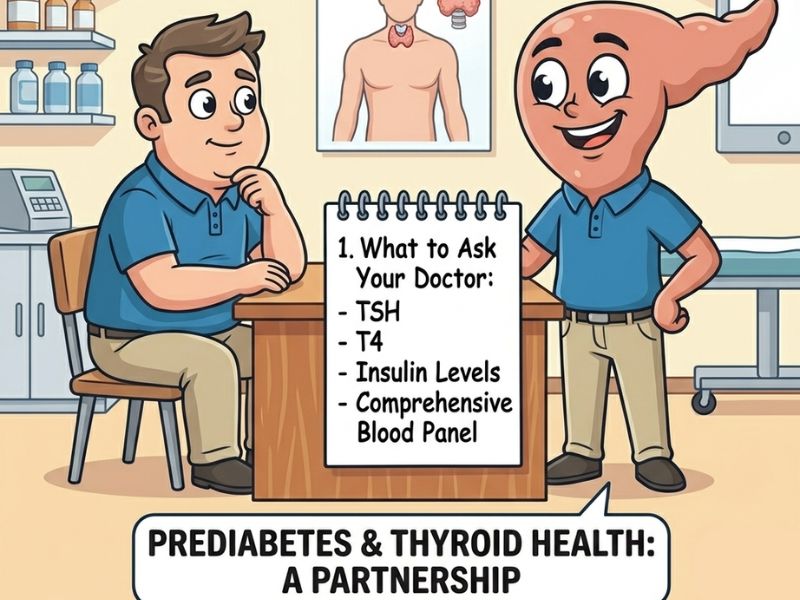
Ask for a TSH test. TSH — thyroid stimulating hormone — is the standard screening test for thyroid function. It is a simple blood test.
If your TSH is elevated, it means your body is working harder than normal to stimulate a thyroid that isn’t keeping up. A free T4 test gives additional detail about how much active thyroid hormone is actually circulating.
Furthermore, if you are already on thyroid replacement therapy such as levothyroxine, it is worth asking your doctor whether your current dose has been reviewed recently. Thyroid requirements can change over time, particularly as body weight, age, and other medications shift.
In other words, this is a conversation worth having. A pharmacist can review your full medication list, flag any interactions, and help you understand what your results mean in plain language. That conversation costs nothing and could change everything.
What You Can Do Right Now
You cannot out-walk an undiagnosed thyroid problem. However, you can support your metabolic health as comprehensively as possible while the medical side gets sorted.
The fundamentals that support blood glucose also support thyroid health — stable nutrition, movement, stress management, and sleep. These are not separate programs. They are the same program, running in parallel.
If you want a clear, structured starting point that covers the full picture — not just one piece of it — the free ebook below delivers exactly what this moment calls for.
You’ve been trying. The missing piece might not be effort — it might be information. The free ebook is a solid starting point for understanding what’s driving your numbers. Download it and get the picture most people never get.
The Bottom Line on Hypothyroidism and Blood Glucose
Real, documented mechanisms link hypothyroidism and blood glucose — slower glucose clearance, reduced insulin sensitivity, impaired GLUT4 expression, and a metabolic environment that makes blood glucose control significantly harder.
Even mild thyroid underfunction — known as subclinical hypothyroidism — can contribute to insulin resistance in some people, though the strongest evidence is for overt hypothyroidism. If your TSH is creeping upward but still within range, it is worth the conversation.
If your numbers aren’t responding the way they should despite genuine effort, the thyroid deserves to be part of the conversation.
You are not failing. You may simply be missing a piece of the picture that nobody thought to show you.
That changes now.
This blog is for educational purposes only and does not constitute medical advice. Always consult your doctor or pharmacist before making changes to your medication or treatment plan.
References:
- Maratou E, et al. Studies of insulin resistance in patients with clinical and subclinical hypothyroidism. European Journal of Endocrinology, 2009. https://pubmed.ncbi.nlm.nih.gov/19141606/
- Brenta G. Why Can Insulin Resistance Be a Natural Consequence of Thyroid Dysfunction? Journal of Thyroid Research, 2011. https://pmc.ncbi.nlm.nih.gov/articles/PMC3175696/
- Chen et al. Links between Thyroid Disorders and Glucose Homeostasis. Diabetes & Metabolism Journal, 2022. https://www.e-dmj.org/journal/view.php?number=2654