
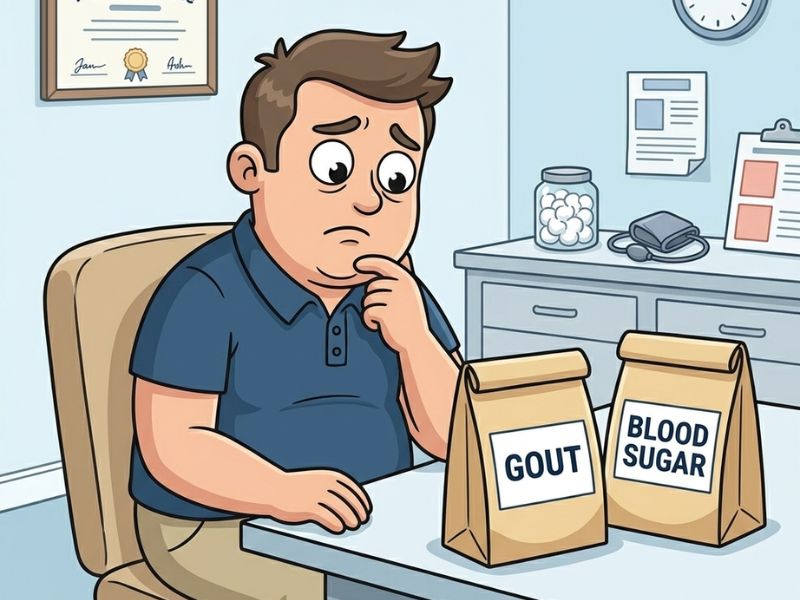
Gout and blood sugar. Are they the same problem?
You have gout. You have prediabetes or type 2. Your doctor treats them like separate problems. They’re not. Consider this the conversation nobody has given you.
Important before you continue: The information in this blog is educational and does not replace personalised medical advice. If you are currently on medication for gout, blood pressure, or blood sugar — including allopurinol, metformin, or diuretics — please speak to your doctor or pharmacist before making any changes to your diet, lifestyle, or medication routine.
What Is Gout?

Most people think of gout as a rich man’s disease — too much red wine and red meat. That picture is incomplete, and it’s hurting patients.
Your body makes uric acid naturally. The problem isn’t production — it’s clearance.
Purines are found in certain foods — red meat, organ meat, shellfish, beer — but they are also produced by the body itself during normal cell turnover. Normally, uric acid travels through the bloodstream, gets filtered by the kidneys, and is flushed out through urine. The problem starts when the kidneys are not clearing it efficiently enough.
In nearly two decades as a pharmacist, I’ve seen the same pattern again and again — and it’s metabolic, not dietary. That metabolic pattern has a name.
What Is Prediabetes — and How Does Blood Sugar Factor In?
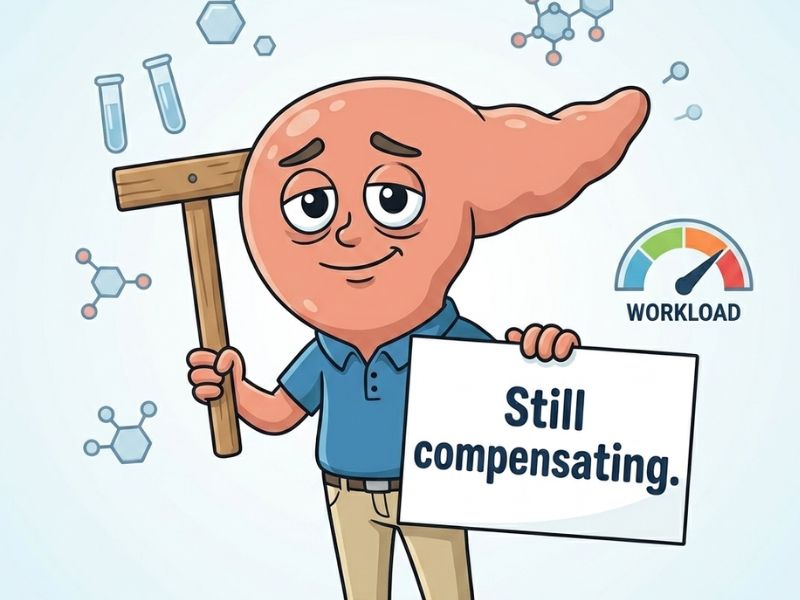
Prediabetes is the stage before type 2 diabetes. It means your blood sugar is consistently higher than normal but not yet in the diabetic range. The driver behind it is insulin resistance — a condition where your cells stop responding effectively to insulin’s signal to absorb glucose from the bloodstream.
Consequently, your pancreas compensates by producing more insulin. For a while, this works. Blood sugar stays relatively controlled, but only because your pancreas is working overtime. Over time, that compensation breaks down. Blood sugar climbs. The diagnosis follows.
Insulin resistance can be present for years before blood sugar numbers become alarming. Meanwhile, other systems in the body are already being affected — including, as it turns out, the system that clears uric acid.
How Gout and Blood Sugar Are Connected
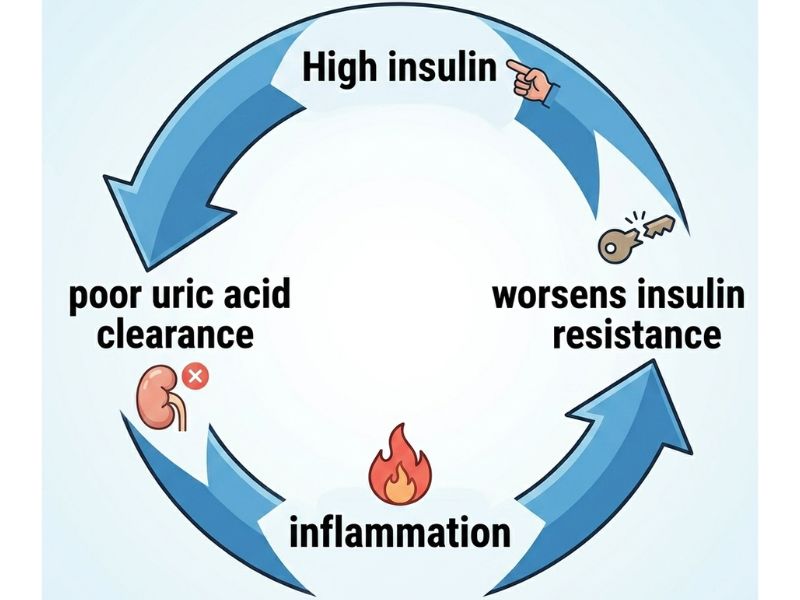
Here is the mechanism nobody explains at the pharmacy counter.
Insulin resistance does not only affect blood sugar. It also impairs the kidneys’ ability to excrete uric acid. When insulin levels are chronically elevated — as they are in insulin resistance — the kidneys reabsorb more uric acid back into the bloodstream instead of clearing it. The result is higher uric acid levels, even if nothing has changed in the diet.
Furthermore, high uric acid levels themselves promote inflammation. That inflammation, in turn, worsens insulin resistance. Meanwhile, the body is carrying the burden of both conditions simultaneously — joint pain that limits movement, fatigue from dysregulated blood sugar, inflammation affecting every organ system. Each barrier makes the other harder to address.
Research consistently shows that people with gout have significantly higher rates of insulin resistance and type 2 diabetes than the general population — and that the relationship runs in both directions.
If you have gout and your blood sugar is climbing, your body is not sending two messages. It is sending the same message twice. And if chronic stress is also part of your daily life, it is worth understanding that stress has its own direct effect on blood sugar — adding another layer to the same problem.
This is not a discipline problem. This is a biology problem. And biology responds to the right input — not more willpower. It is also worth noting that insulin resistance and weight gain are part of the same cycle — another expression of the same underlying problem.
What About Your Medication?
Medication is part of most people’s management plan at this stage.
It helps to understand what each one is actually doing — and where the gaps are.
Metformin is the most commonly prescribed medication for type 2 diabetes and insulin resistance. It works primarily by reducing glucose production in the liver and improving insulin sensitivity. Some research suggests it may have a modest uric acid-lowering effect as a secondary benefit — though it is not prescribed for gout directly.
Allopurinol is the standard medication for chronic gout. It reduces uric acid production by blocking the enzyme xanthine oxidase. There is emerging evidence that lowering uric acid through allopurinol may have indirect benefits for insulin resistance and cardiovascular risk — though again, this is not its primary purpose.
A separate note on diuretics. If you take water pills for blood pressure — hydrochlorothiazide or furosemide are the most common — ask your doctor directly: “Is this making my gout worse?” For many people, the answer is yes. These medications reduce uric acid excretion through the kidneys and can impair glucose tolerance over time. It does not mean stopping the medication — it means having the right conversation.
What You Can Actually Do About Both
The good news is that the shared root of these two conditions means that the same lifestyle changes move both needles simultaneously. You do not need two separate treatment plans. You need one clear starting point.
Movement is the most powerful lever. Exercise improves insulin sensitivity directly — meaning your cells respond better to insulin, your blood sugar stabilises, and your kidneys clear uric acid more efficiently. If you are already on your feet all day, that is not nothing — but the kind of movement that improves insulin sensitivity is different from walking a sales floor.
The most practical option is a 10-minute brisk walk after your biggest meal of the day. No gym required. It lowers blood sugar immediately and supports uric acid clearance — and if you want to understand exactly how exercise targets insulin resistance at the cellular level, that mechanism is worth knowing.
Food matters — but not in the way most gout advice suggests. The traditional focus on avoiding red meat and organ meat is correct, but incomplete.
The Fructose Connection
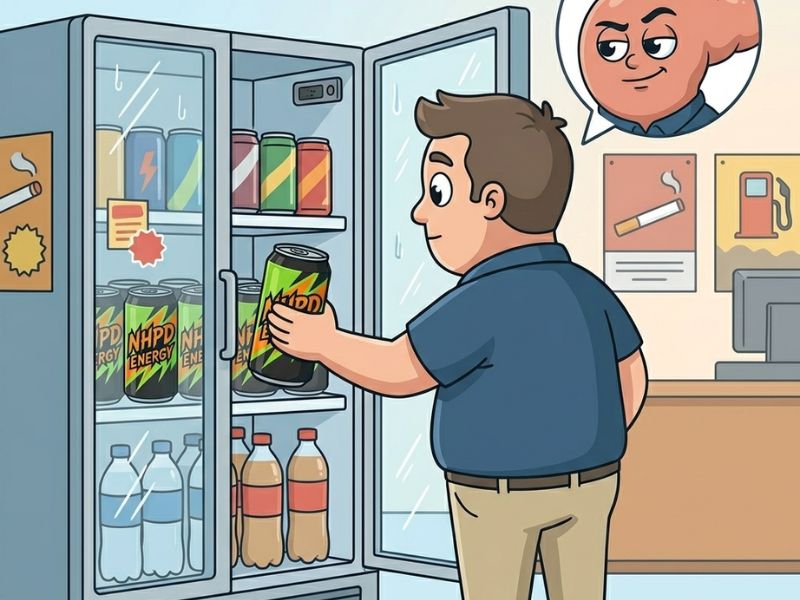
Fructose deserves its own mention. Unlike other sugars, fructose is metabolised in the liver in a way that directly generates uric acid as a byproduct.
It also promotes insulin resistance through a separate pathway. This means that soda, energy drinks, sweetened iced tea, fruit juice, and ultra-processed foods are driving both conditions at the same time — not just one.
One 20-ounce (590 ml) soda can raise uric acid levels within an hour while simultaneously spiking insulin. Reducing fructose is one of the most targeted single changes available for someone managing both gout and blood sugar.
Your day, translated:
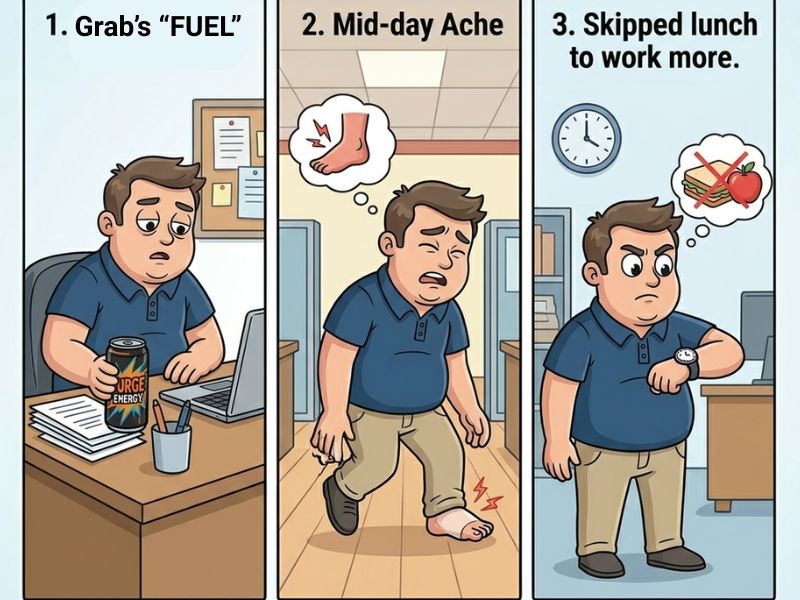
- That energy drink you grab mid-afternoon? The fructose in it is raising your uric acid within the hour and spiking your insulin at the same time.
- If you are on your feet with a gout flare, the inflammation from that flare is also worsening your insulin resistance — your blood sugar is higher because your joints are inflamed.
- Skipping a meal because you are busy sets you up for a blood sugar crash and overeating later. That cycle hits both conditions simultaneously.
Hydration is underrated. Adequate water intake supports uric acid excretion through the kidneys. Dehydration concentrates uric acid in the bloodstream and increases the risk of crystal formation. Consistent daily hydration — not reactive drinking after a flare — is part of the management.
Sleep and rhythm close the loop. Poor sleep raises inflammatory markers, disrupts insulin signaling, and impairs the body’s overnight repair processes — and the direct effect of sleep deprivation on blood sugar is one of the most underestimated factors in metabolic health.
If your schedule makes consistent sleep difficult, focus on one thing: keeping the same wake-up time even on days off. That single anchor stabilises your body’s rhythm more than anything else.
The Bottom Line on Gout and Blood Sugar
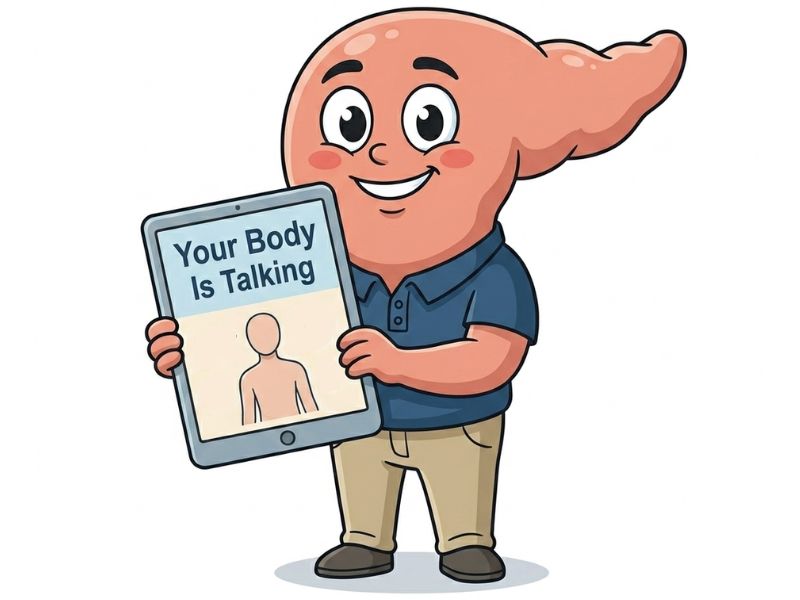
One body. One root. One starting point.
Your body has been telling you something. Gout and blood sugar together are not two separate signals — they are the same signal, arriving through two different doors. Now you know what they are saying.
Download the Free Ebook → Your Body Is Talking: A Pharmacist’s Guide to Stopping Prediabetes — understand the blood sugar side of this problem, where the real leverage is, and where to start. Free.
Medical Disclaimer: The information provided in this blog is for educational purposes only and is not intended as medical advice. Always consult your doctor or pharmacist before making changes to your diet, lifestyle, or medication routine. Individual results vary. This content does not replace a personalised consultation with a qualified healthcare professional.
References:
- Bhole V, Choi JW, Kim SW, de Vera M, Choi H. Serum uric acid levels and the risk of type 2 diabetes: a prospective study. American Journal of Medicine. 2010;123(10):957–961. https://pubmed.ncbi.nlm.nih.gov/20920699/
- Takir M, Kostek O, Ozkok A, et al. Lowering uric acid with allopurinol improves insulin resistance and systemic inflammation in asymptomatic hyperuricemia. Journal of Investigative Medicine. 2015;63(8):924–929. https://pubmed.ncbi.nlm.nih.gov/26571421/
- Beattie CJ, Fulton RL, Higgins P, et al. Allopurinol initiation and change in blood pressure in older adults with hypertension. Hypertension. 2014;64(5):1102–1107. https://pubmed.ncbi.nlm.nih.gov/25135183/