
As a pharmacist in Cape Town, I’ve watched countless customers blame themselves for sugar cravings. But here’s what I’ve learned about cortisol sugar cravings: they aren’t about willpower – they’re about understanding how your stress hormones actually work.
The Tuesday Afternoon Mystery

Thabo approached my pharmacy counter looking frustrated. He’d been managing his prediabetes well for months, but lately, something strange was happening.
“I don’t understand it,” he said, shaking his head. “Every Tuesday afternoon around 3 PM, I get these intense sugar cravings. Nothing’s changed with my meals or medication. But by the time I get home, I’ve bought a chocolate from the Pick n Pay checkout.”
What Thabo didn’t realize? Every Tuesday at 2 PM, his manager held the weekly performance review meetings. The stress of potential criticism was triggering stress-driven cravings an hour later.
His body was responding exactly as designed – unfortunately, it was designed for survival, not modern workplace stress.
What Are Cortisol Sugar Cravings?
Here’s what most people don’t understand about cortisol sugar cravings: they’re not emotional weakness. They’re measurable, predictable physiology.
Understanding the broader picture of how stress affects blood sugar helps explain why cortisol creates such powerful daytime cravings.
When you think self-critical thoughts like “I’m terrible with food” or “I have no willpower,” you trigger your body’s stress response. Subsequently, cortisol floods your system, and your liver immediately starts converting stored energy into glucose.
However, your brain interprets this glucose spike as “fuel available” and simultaneously craves quick energy to maintain the response. Therefore, these cravings are your body trying to help you survive what it perceives as a threat.
The problem? Your brain can’t tell the difference between “I’m being chased by a lion” and “I’m criticizing myself about yesterday’s biscuit.”
The Science Behind Cortisol Sugar Cravings
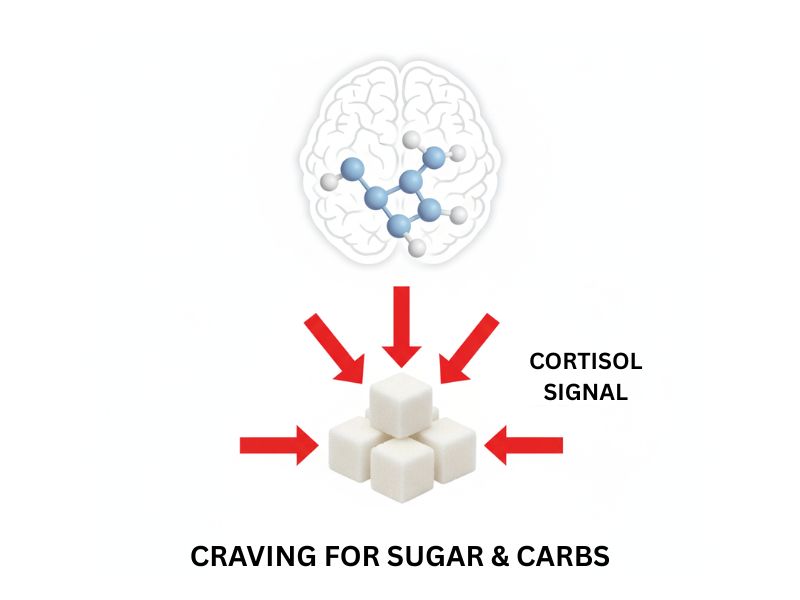
Research shows that cortisol directly increases appetite for high-energy foods¹. Furthermore, chronic stress elevates cortisol levels and creates measurable preferences for sugar and fat combinations².
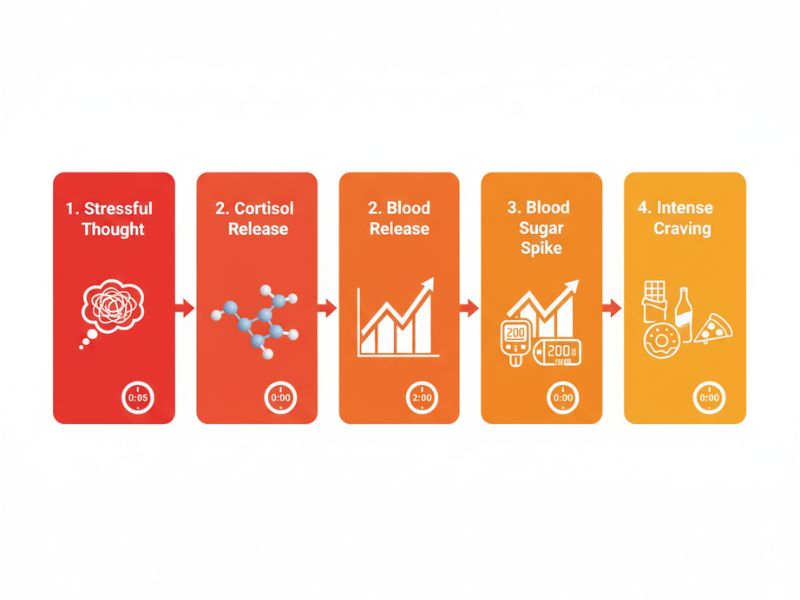
Here’s the cascade that creates stress-driven cravings:
- Self-critical thought (0-30 seconds)
- Stress hormone release (30 seconds – 2 minutes)
- Blood sugar spike (2-15 minutes)
- Sugar craving activation (15-60 minutes)
Additionally, cortisol doesn’t just increase cravings – it actively reduces your brain’s ability to resist them. The part of your brain responsible for self-control (prefrontal cortex) literally gets less blood flow when cortisol is elevated.
Translation for retail workers like Thabo: That 3 PM chocolate craving after a stressful meeting isn’t weakness. It’s biochemistry.
Why Your Inner Critic Triggers Sugar Cravings
In my years behind the pharmacy counter, I’ve noticed that stress-driven cravings follow predictable patterns. Moreover, they’re almost always preceded by self-critical thoughts.
Consider these common inner critic statements and their effects:
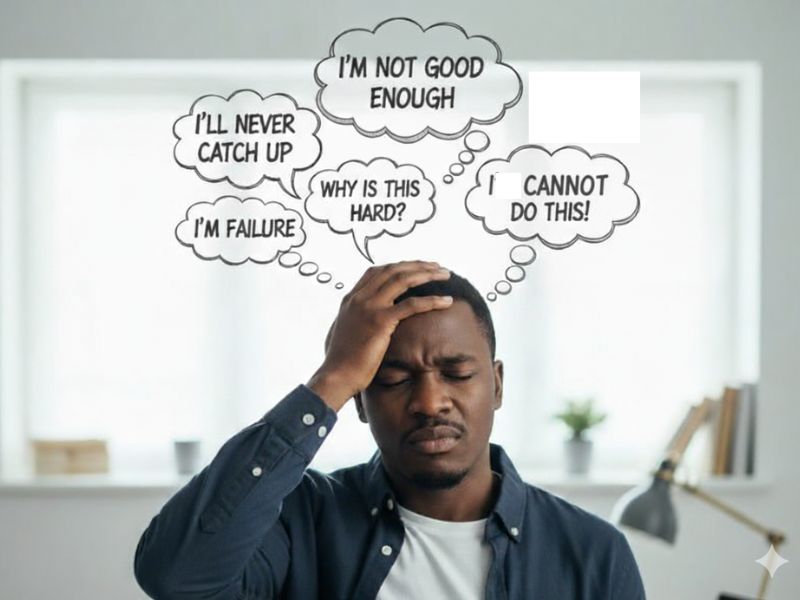
“I’m so bad with food” → Creates shame-based stress that literally increases sugar cravings
“I have no willpower” → Generates feelings of helplessness, elevating stress hormones
“I’ll never be healthy” → Activates chronic stress responses that maintain elevated cortisol
“I’m such a failure” → Creates the exact hormonal environment that drives intense cravings
Each of these thoughts is essentially giving yourself a stress hormone injection designed to make you crave sugar.
This stress-shame-craving connection becomes even more damaging over time. Learn why your brain works against you with food and how the complete biochemical cascade drives self-sabotage patterns.
The Retail Worker’s Reality: When Cortisol Sugar Cravings Strike
Let me paint a picture that might sound familiar. It’s Thursday afternoon at Woolworths. You’ve been on your feet since 8 AM, dealing with difficult customers and tight deadlines.

Around 3 PM, your supervisor mentions something about “improving your customer service approach.” It’s not harsh criticism, but your inner critic immediately translates it to: “I’m failing at my job.”
Within minutes, you’re thinking about the chocolate display near the staff room. By 4 PM, you’re unwrapping a Bar One, telling yourself you “deserve it” after such a hard day.
This isn’t emotional eating. This is stress-driven cravings in action.
Your body responded to the perceived threat (criticism) by preparing for survival. In addition, the sugar craving was your brain’s attempt to fuel the stress response.
Breaking the Cortisol Sugar Cravings Cycle
Understanding stress-driven cravings changes everything about how you approach them. Instead of fighting willpower with willpower, you can interrupt the stress response itself.
The 4-Minute Intervention Window

Research shows you have approximately 4 minutes from the trigger thought to peak cortisol release. Master this window, and you can prevent stress-driven cravings before they start.
The Immediate Response Protocol:
- Notice the critical thought within 30 seconds
- Name it as stress response: “I’m having stress-driven cravings because of cortisol”
- Take 3 slow breaths (4 counts in, 6 counts out)
- Move your body for 60 seconds minimum
The Reframe Technique
When you catch that inner critic voice, try these evidence-based alternatives:
- Instead of “I’m weak,” think “My body is responding to stress”
- Instead of “I have no willpower,” think “I’m experiencing stress-hormone cravings”
- Instead of “I’m a failure,” think “This is normal human physiology”
This isn’t positive thinking. This is accurate thinking that doesn’t trigger additional cortisol release.
Ready to interrupt the stress-craving cycle before it starts?
Your Body Is Talking: A Pharmacist’s Guide to Stopping Prediabetes is a free guide that explains exactly what’s happening — and what to do about it. No meal plans. No shame. Just clarity.
Practical Prevention for Cortisol Sugar Cravings
Based on my observations working with prediabetic patients, here are the most effective strategies for managing stress-driven cravings:
Morning Cortisol Regulation

- Consistent wake times to regulate natural cortisol rhythms
- Protein-rich breakfast to stabilize blood sugar
- 10 minutes of morning sunlight when possible
Workplace Stress Management

- Recognition that criticism (real or perceived) triggers stress-driven cravings
- Brief walking breaks during high-stress periods
- Keeping healthy snacks available for when cravings hit
Evening Recovery Protocol
- Reflection on stress patterns from the day
- Gentle movement or stretching
- Early enough bedtime to reset cortisol for the next day
When Sugar Cravings Make Sense
Connect these experiences to your own patterns:
- Do sugar cravings often follow stressful interactions?
- Are they worse after self-critical thoughts?
- Do they typically happen at predictable times (like afternoon meetings)?
- Are they stronger during particularly challenging work periods?
If you answered yes to any of these, stress-hormone cravings are likely playing a bigger role than you realize.
The Compassionate Approach to Sugar Cravings
Here’s what I wish every person struggling with sugar cravings understood: these intense urges are not a character flaw. They’re a normal physiological response to stress – including the stress you create with self-criticism.

When you understand stress-driven cravings, you can work with your body instead of against it:
- Expect them during high-stress periods
- Prepare for them with healthy alternatives nearby
- Interrupt them using the 4-minute window technique
- Recover from them without additional self-criticism
Furthermore, stress-driven cravings become much more manageable when you stop adding shame to the equation.
These daytime cortisol patterns often intensify at night too—discover why you crave sugar at night and how nighttime stress compounds the problem.
Your Next Step: From Understanding to Action
Now that you understand cortisol sugar cravings, here’s your practical next step: for one week, simply notice when sugar cravings occur and what thoughts preceded them.
Don’t try to change anything yet. Just observe the connection between your inner critic and your cravings.
Most people are amazed to discover how predictable stress-hormone cravings actually are once they start paying attention to the stress-thought-craving pattern.
If chronic stress patterns have been affecting your eating for months or years, you may be dealing with insulin resistance. Learn how to recognize insulin resistance signs at home before these patterns become harder to reverse.
Understanding cortisol sugar cravings isn’t just academic knowledge – it’s practical power over your health.
Ready to break free from the cycle? Start by recognizing that your cravings make complete biological sense, and work from there.
Medical Disclaimer
This blog post is for educational and informational purposes only and is not intended as medical advice. I am a licensed pharmacist sharing evidence-based health information, but I am not your healthcare provider.
If you have been diagnosed with insulin resistance, prediabetes, diabetes, or any other medical condition, consult with your doctor or qualified healthcare professional before making changes to your diet, exercise routine, or medication regimen. Individual health circumstances vary, and what works for one person may not be appropriate for another.
The information provided here is based on current scientific understanding and clinical evidence, but it does not replace personalized medical guidance from a healthcare provider who knows your complete medical history.
If you experience any concerning symptoms or have questions about your specific health situation, please seek professional medical advice.
References
- Adam, T.C. & Epel, E.S. “Stress, eating and the reward system.” Physiology & Behavior, 2007. https://www.sciencedirect.com/science/article/abs/pii/S0031938407001424
- Torres, S.J. & Nowson, C.A. “Relationship between stress, eating behavior, and obesity.” Nutrition, 2007;23(11-12):887-894. https://pubmed.ncbi.nlm.nih.gov/17869482/
- Sinha, R. & Jastreboff, A.M. “Stress as a common risk factor for obesity and addiction.” Biological Psychiatry, 2013;73(9):827-835. https://pmc.ncbi.nlm.nih.gov/articles/PMC3658316/