
You’re searching for an insulin resistance test at home. I get it. You want answers without booking appointments, without explaining symptoms to another doctor, without more medical bills.
Here’s what nobody tells you: Your body’s already giving you the answer.
I’m a pharmacist. I studied insulin resistance in university. Passed the exams. Could recite the mechanisms. But I didn’t actually understand it until my own GP sat me down and explained what was happening in MY body.
That’s the problem with how we talk about insulin resistance. We make it complicated. Turn it clinical. Make it something you need expensive tests to “discover.”
But if you’re searching for a test, you already know something’s wrong. You’ve noticed the belly fat that won’t shift. The energy crashes after meals. The constant cravings. The exhaustion despite sleeping.
That’s not just being tired. Instead, that’s your body screaming that insulin isn’t working anymore.
So yes, at-home tests exist. They cost R500-1500+. Fasting is required. The numbers you get back? They need interpretation.
But here’s what matters more: What will you DO with those numbers?
Because whether the test says your HOMA-IR (Homeostatic Model Assessment of Insulin Resistance) score is 2.5 or 4.3, the answer is the same: Change what you’re doing, or this gets worse.
Let me show you what insulin resistance actually means, how to recognize it without expensive tests, and what to do about it NOW. Because every day you wait, this progresses.
What Insulin Resistance Actually Means (Without the Medical Jargon)
Before you order an insulin resistance test at home kit, understand what you’re actually testing for.
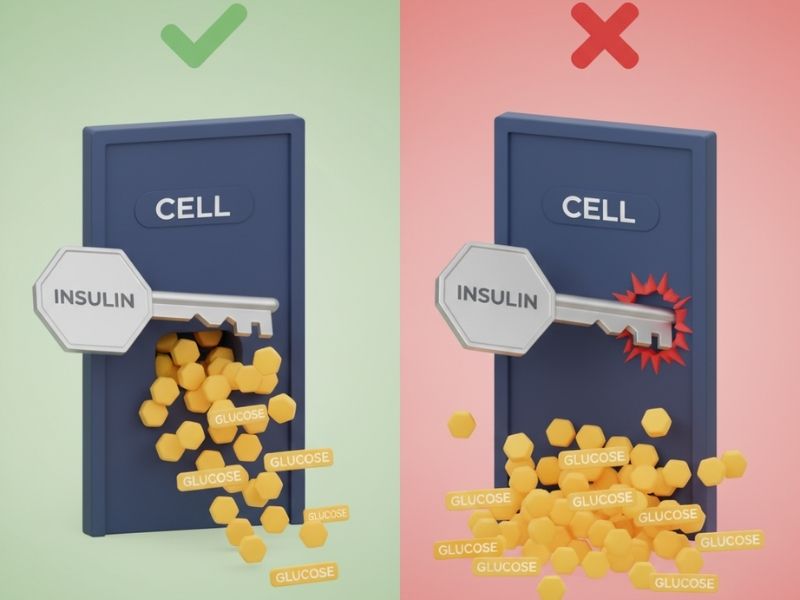
Think of insulin as a key. It unlocks your cells so glucose (blood sugar) can get inside and give you energy.
Insulin resistance happens when your cells stop responding to that key. They’ve been bombarded with so much insulin, so often, that they’ve built up defenses. They resist.
So your pancreas produces MORE insulin to force those cell doors open. And for a while, this works. Your blood sugar stays “normal” because you’re flooding your system with insulin to compensate.
But eventually, your pancreas can’t keep up. That’s when you get the prediabetes diagnosis. Then diabetes. Then complications.
Here’s the critical point: This is REVERSIBLE at the insulin resistance and prediabetes stages. To understand how to reverse it, start with foods that specifically improve insulin sensitivity.
However, you need to act now. Not after another test. Not after “monitoring it for a while.” Now.
I Know About Family History Personally
I’ve had family members succumb to diabetes. I watched what happens when insulin resistance goes unmanaged for years – the neuropathy that makes walking painful, the vision problems that make reading difficult, the constant doctor visits that steal independence.
My mother has diabetes. She’s almost 80 now, and she’s managing it well. She caught it early, understood what was happening in her body, and made the changes needed to stay healthy and independent. She’s proof that early recognition and action change everything.
What helped my mother manage it successfully?
Knowledge. Action. Consistency.
She understood what was happening in her body and made the changes needed to stay healthy. No waiting for more tests. No “monitoring” while the disease progressed. She acted.
That’s why I do this work. Because I don’t want you to become the family member who succumbs. Instead, I want you to become the one who manages it, who stays healthy, who’s there for your family.
Your kids deserve to see YOU at 80, healthy and present. Not lost to a disease that was preventable.
Do Insulin Resistance Tests at Home Actually Exist? (And Should You Buy One?)
Yes. They do.
You can buy an insulin resistance test at home kit online or from some pharmacies. They measure fasting glucose and fasting insulin, then calculate your HOMA-IR score (Homeostatic Model Assessment of Insulin Resistance).
The reality:
- Cost: R500-1500+ depending on the kit
- Requires: 8-12 hour fast, finger prick blood sample, mail to lab
- Wait time: 5-10 days for results
- Interpretation: You still need to understand what the numbers mean
- Action: You still need to decide what to DO about it
Some tests measure just glucose (not enough information). Meanwhile, others measure glucose and insulin but require you to calculate HOMA-IR yourself. Additionally, a few provide comprehensive panels including lipids and HbA1c.
Here’s what most people don’t realize:
Testing can provide valuable baseline data and help track your progress. But whether you’re considering and insulin resistance test at home or professional lab work, don’t let waiting for test results delay taking action.
If you recognize the symptoms below, you can start making changes TODAY while you arrange proper testing with your doctor.
Your Body’s Already Giving You the Signs of Insulin Resistance (Listen to These)
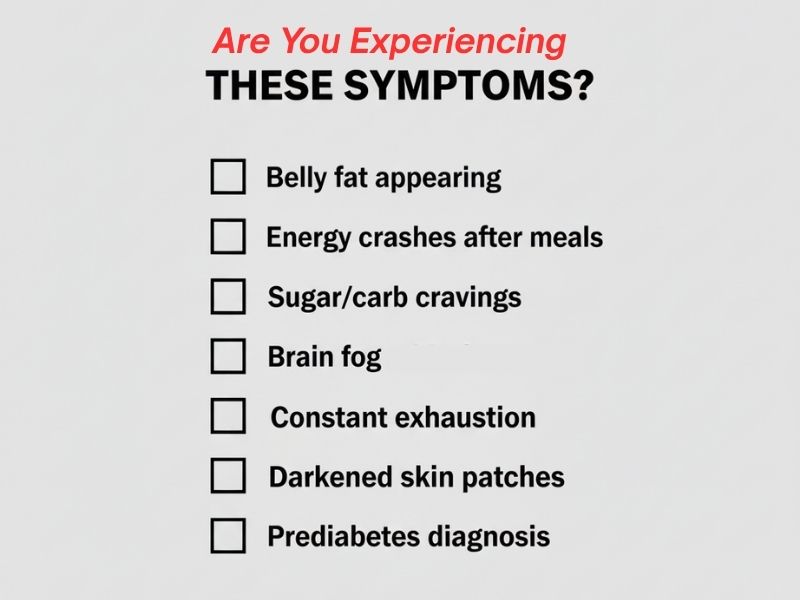
You don’t need to wait for test results to recognize if insulin resistance might be affecting you. Your body’s giving you signals right now:
1. Belly Fat That’s Appearing and Won’t Budge
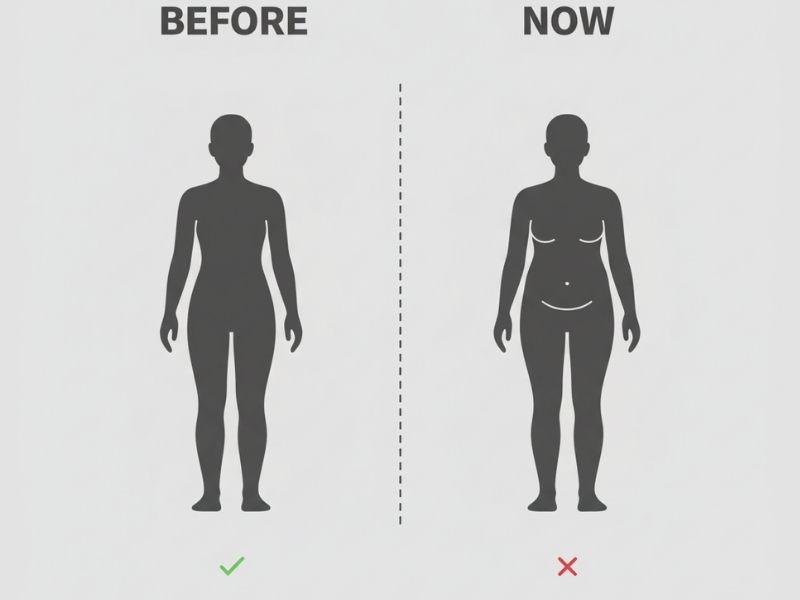
Not “is your waist above X centimeters” – everyone’s built differently.
The real question: Is your belly getting bigger while everything else stays the same?
Can you pinch soft, grabbable fat around your middle that wasn’t there a year ago?
Are your pants tighter in the waist even though your weight hasn’t changed much?
Is the fat accumulating around your belly specifically, not your arms or legs?
That’s often your body storing excess glucose as fat because your cells won’t accept it as fuel.
Why the Pattern Matters More Than the Number
The pattern matters more than the measurement. You might be big-framed and solid through the middle – that’s not the problem. However, soft belly fat appearing and accumulating despite you not changing anything else about your lifestyle can be a warning sign.
Important note: While belly fat is strongly correlated with insulin resistance, other conditions can also cause similar patterns. Therefore, these signs suggest you should see your doctor for proper testing, not replace professional diagnosis.
2. Energy Crashes After Meals
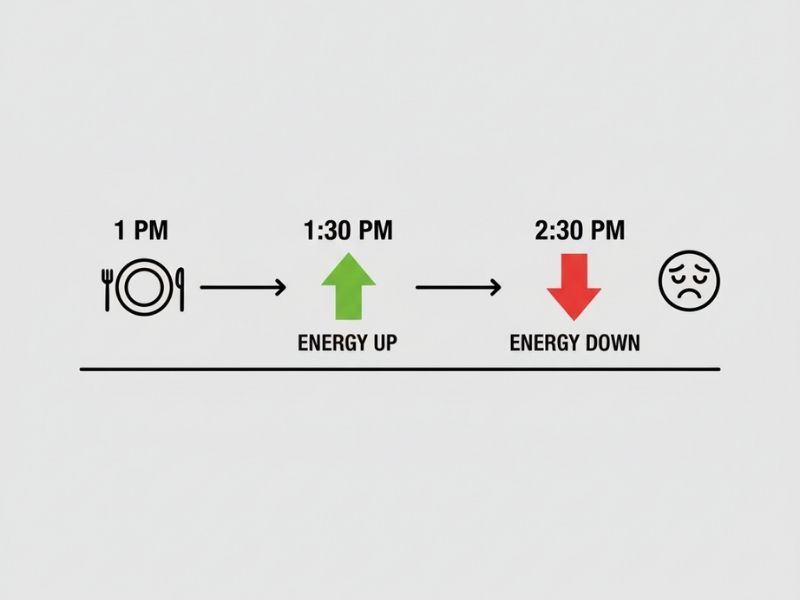
You eat lunch at 1pm. By 2:30pm you’re exhausted, struggling to focus, craving something sweet.
That’s not normal tiredness. Instead, that could be insulin spiking hard, pushing glucose into cells, then crashing you down when it overshoots.
3. Constant Sugar and Carb Cravings
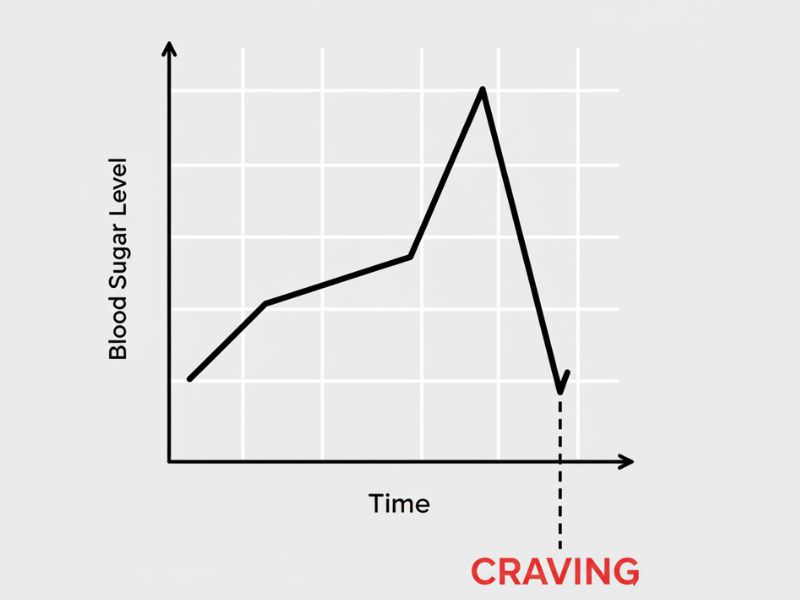
Your cells might be starving for energy (because insulin resistance blocks glucose from getting in), so your brain screams for quick fuel: carbs, sugar, anything that raises blood glucose fast.
It’s not lack of willpower. Rather, it could be your body trying to solve an energy crisis.
4. Brain Fog and Concentration Difficulty
Your brain runs on glucose. When insulin resistance prevents efficient glucose delivery, your brain doesn’t work right. Therefore, that “fuzzy thinking” might not just be stress or poor sleep.
Important note: Brain fog and fatigue can also be caused by thyroid disorders, sleep apnea, vitamin deficiencies, depression, and other conditions. Consequently, if you’re experiencing these symptoms, see your doctor for comprehensive testing.
5. Exhaustion Despite Sleeping
You sleep 7-8 hours. You wake up tired. You’re tired all day. This could be because your cells aren’t getting the fuel they need to produce energy efficiently.
However, persistent exhaustion warrants medical evaluation to rule out other conditions like sleep apnea, anemia, or thyroid problems.
6. Darkened Skin Patches
Called acanthosis nigricans – dark, velvety patches on neck, armpits, or groin. This is literally your body showing you that insulin levels are chronically elevated.
7. Your Doctor Said “Prediabetes”
Prediabetes isn’t a warning that diabetes might happen someday.
Prediabetes IS diabetes in progress – just at an earlier stage where it’s still highly reversible.
That’s why waiting to “see what happens” is dangerous. The disease process is already underway.
But here’s the critical point: At this stage, lifestyle changes can still reverse it completely. Once your pancreas exhausts itself and you progress to full diabetes, reversal becomes much harder.
If your doctor has already said “prediabetes,” you have your diagnosis. Now you need ACTION alongside any testing your doctor recommends for tracking progress.
Simple Insulin Resistance Tests at Home You Can Do Right Now (Zero Cost, Zero Lab)
Instead of waiting weeks for test results before taking any action, try these observations:
The Belly Fat Pattern Test
Look at yourself honestly:
- Can you grab a handful of soft belly fat that wasn’t there 1-2 years ago?
- Are your pants tighter in the waist despite stable weight?
- Is fat accumulating around your middle specifically?
This pattern suggests insulin resistance might be developing – and it’s one of the most reliable insulin resistance tests at home you can perform without any equipment.
The Meal Response Test
Tomorrow, notice how you feel 1-2 hours after eating a carb-heavy meal (bread, pasta, rice).
Energized and focused? Good insulin sensitivity.
Exhausted and foggy? Insulin resistance likely.
The Hunger Pattern Test
Are you hungry 1-2 hours after eating a full meal? That could be your cells not getting fuel properly, triggering hunger signals even though you just ate.
The Stress-Eating Connection Test
Notice when you reach for snacks. Is it when you’re stressed, frustrated, or overwhelmed? High cortisol (stress hormone) worsens insulin resistance, creating a vicious cycle. In fact, stress affects blood sugar as much as diet does – something most people don’t realize.
These observations cost nothing. And they can help you recognize patterns worth discussing with your doctor.
Ready to go deeper?
Your Body Is Talking: A Pharmacist’s Guide to Stopping Prediabetes is a free guide that explains exactly what’s happening — and what to do about it. No meal plans. No shame. Just clarity.
What to Do If You Recognize These Insulin Resistance Signs
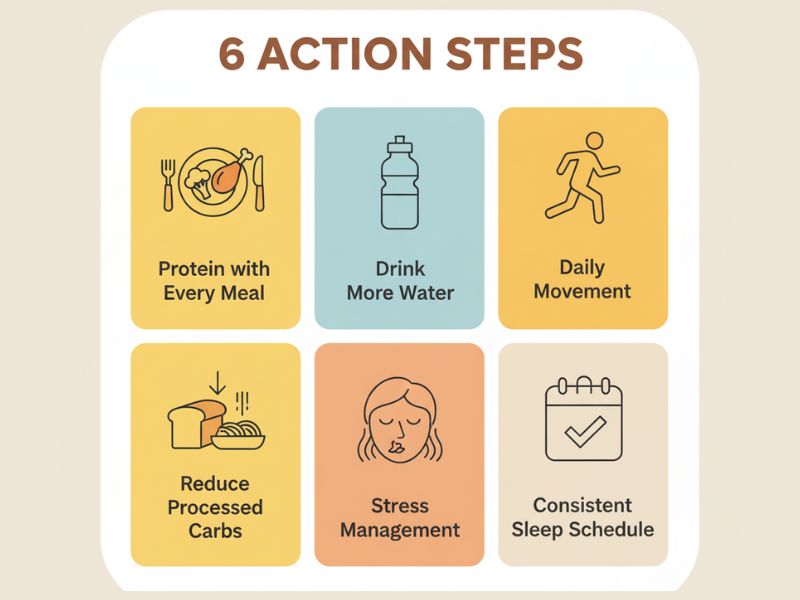
Here’s what can actually reverse insulin resistance at the prediabetes stage – not just manage it or slow it down, but reverse it.
Important: These lifestyle changes are evidence-based and valuable whether you’re waiting for test results, already diagnosed, or taking preventive action. However, they don’t replace professional medical evaluation, especially if you’re experiencing persistent symptoms.
1. Add Protein to Every Meal
Protein stabilizes blood sugar. It prevents the spike-crash cycle that exhausts your pancreas.
Retail manager eating a garage pie for lunch? Add biltong or hard-boiled eggs. Not instead of – in addition to, at first.
Small protein additions stabilize blood sugar without requiring major diet overhauls. Learn more about which foods reverse prediabetes most effectively.
Small changes stick better than dramatic overhauls.
2. Drink More Water During Shifts
Water helps your kidneys clear excess glucose. It prevents dehydration that worsens insulin resistance. Furthermore, it costs R0.
Keep a bottle at your desk. Refill it twice during your shift. That’s it.
3. Move After Meals When Possible
Even 5-10 minutes of walking after eating helps muscles absorb glucose without needing as much insulin.
Not a gym session. Not a workout. Just movement.
Walk the store floor. Do a quick stock check. Anything that gets you moving.
4. Reduce Processed Carbs Gradually
Not eliminate. Not “cut out” everything you enjoy. Reduce.
Swap one processed carb meal per day for something with more protein and vegetables. That’s week one. Master that before adding more changes.
5. Manage Stress (Cortisol Worsens Insulin Resistance)
Retail management is high-stress. Long hours, customer complaints, staff issues, impossible targets.
Chronic stress floods your body with cortisol, which directly increases insulin resistance.
You can’t eliminate stress, but you can:
- Take actual lunch breaks (even 15 minutes away from the floor)
- Breathe deliberately when frustration spikes
- Move stress through your body (gym, walking, anything physical)
Understanding how stress affects your blood sugar can help you manage both more effectively – stress management becomes blood sugar management.
If you find yourself stress eating during difficult shifts, the Mirror Method offers a practical way to interrupt the pattern before it affects your glucose levels.
6. Understand the Timeline
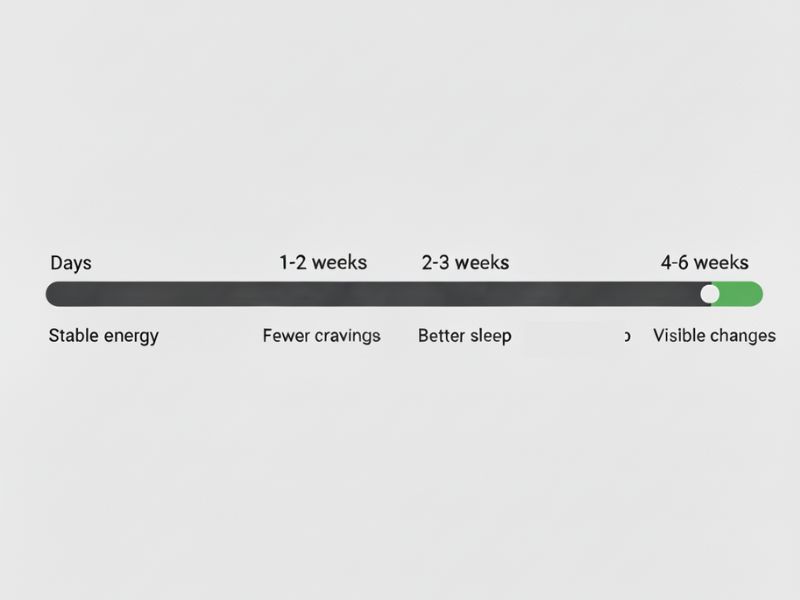
These changes work within DAYS and WEEKS, not months.
Many people notice:
- More stable energy within days
- Reduced cravings within 1-2 weeks
- Better sleep within 2-3 weeks
- Visible belly fat reduction within 4-6 weeks
Individual results vary based on starting point, consistency, and other health factors, but improvements often happen faster than people expect.
My Personal Experience
I’m living proof this works.
I train full-body twice a week and run 5km weekly. A few months ago, I couldn’t sustain those sessions – I’d run out of energy too quickly.
Now? Longer workouts, better recovery, more strength.
That’s not just fitness improving. That’s insulin sensitivity improving. My cells are getting the fuel they need efficiently.
The workouts themselves are reversing insulin resistance while making me stronger. The better my insulin sensitivity, the more energy I have for training. The more I train, the better my insulin sensitivity.
It’s a virtuous cycle. And it started with the same small changes I’m telling you to make.
When You Actually Need a Doctor and Formal Insulin Resistance Testing
Professional medical evaluation is important in these situations:
You Should See a Doctor If:
You recognize multiple symptoms listed above
These symptoms can indicate insulin resistance, but they can also be caused by thyroid disorders, sleep apnea, vitamin deficiencies, depression, or other conditions.
Get comprehensive testing to confirm the diagnosis and rule out other causes.
You’ve been diagnosed with prediabetes and want to track progress
HbA1c tests and fasting insulin levels every 3-6 months show if your lifestyle changes are working.
Testing provides objective data and motivation as you see numbers improve.
You’re experiencing severe symptoms
Extreme thirst that water doesn’t satisfy.
Urinating constantly (especially at night).
Unexplained weight loss.
Blurred vision.
Wounds that won’t heal.
These require immediate medical attention.
You want baseline data before starting lifestyle changes
HOMA-IR scores and fasting insulin levels give you concrete numbers to track.
Seeing objective improvement can be powerfully motivating.
Many people find that watching their numbers improve reinforces their commitment to lifestyle changes.
Lifestyle changes aren’t working after 3-6 months.
If you’ve genuinely made changes and symptoms persist, get comprehensive testing.
There might be other factors (thyroid, PCOS, medication side effects).
You’re considering medication support
Some people need metformin alongside lifestyle changes.
That requires medical supervision and monitoring.
Don’t Wait for Test Results to Start Making Changes
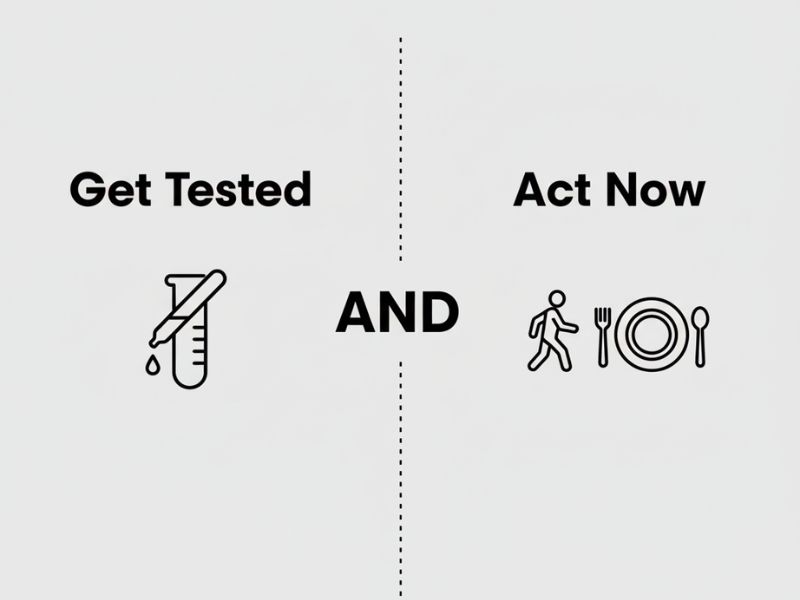
Here’s the key message: Whether you choose an insulin resistance test at home or professional lab work, testing is valuable for diagnosis, baseline data, and tracking progress. But don’t let the wait for test results stop you from taking action.
If you recognize the symptoms above, you can start making lifestyle changes TODAY while you arrange proper testing with your doctor.
The lifestyle interventions that reverse insulin resistance are the same whether your HOMA-IR score is 2.5 or 4.3. They’re the same whether you’re pre-prediabetic or already diagnosed.
Start Small, Start Now
Start with one change this week. Just one:
- Add protein to one meal
- Drink one more bottle of water
- Walk for 10 minutes after dinner
- Skip the garage pie once
Next week, add another change.
Small steps aren’t less powerful. They’re more sustainable. And sustainability is what reverses this.
Meanwhile, book that doctor’s appointment. Get proper testing. Create your baseline. Track your progress.
But don’t wait for the appointment to start acting. Your body’s been telling you something’s wrong. Listen and respond.
You’re More Powerful Than You Think
Do not think that you are secondary to your insulin resistance.
You’re more powerful than it.
You just need to start acting like it.
Your body’s giving you signals every single day:
- How you feel after meals
- Where fat is accumulating
- When energy crashes hit
- What you’re craving and why
Those signals are telling you it’s time to act. And the beautiful thing? You can start today, regardless of what any test says tomorrow.
Because the difference between those who reverse insulin resistance and those who progress to diabetes isn’t access to better tests.
It’s making the decision to change while there’s still time to reverse it.
You’re reading this. That means there’s still time.
Don’t waste it waiting for test results to give you permission to start.
The Choice Is Yours – And It’s Urgent
Here’s the truth: insulin resistance doesn’t wait for you to feel ready. Every day you delay, your pancreas works harder. Every week you postpone action, those cells build stronger resistance.
But here’s the equally important truth: you have more power than you think. Small changes – protein with meals, walking after eating, managing stress – start reversing this process within days. Not months. Days.
You don’t need perfect. You don’t need to wait for test results. You don’t need to overhaul your entire life tomorrow.
You just need to start. One change this week. Then another next week.
Your body’s been signaling you for a reason. It’s time to listen and respond.
Continue Your Learning Journey
Now that you understand insulin resistance testing, explore these related topics:
→ Foods to Reverse Prediabetes: A Pharmacist’s Guide – Discover which foods improve insulin sensitivity and why
→ Does Stress Affect Blood Sugar? The Hidden Truth – Learn how cortisol impacts glucose control (often more than food)
→ How to Manage Stress Eating: The Mirror Moment Trigger – Break the shame-stress-eating cycle with the MIRROR method
→ Why Do I Crave Sugar at Night? The 3 AM Cortisol Connection – Understand nighttime cravings and how to stop them
Medical Disclaimer
This blog post is for educational and informational purposes only and is not intended as medical advice. I am a licensed pharmacist sharing evidence-based health information, but I am not your healthcare provider.
If you have been diagnosed with insulin resistance, prediabetes, diabetes, or any other medical condition, consult with your doctor or qualified healthcare professional before making changes to your diet, exercise routine, or medication regimen. Individual health circumstances vary, and what works for one person may not be appropriate for another.
The information provided here is based on current scientific understanding and clinical evidence, but it does not replace personalized medical guidance from a healthcare provider who knows your complete medical history.
If you experience any concerning symptoms or have questions about your specific health situation, please seek professional medical advice guidance.
References:
1. Knowler WC, Barrett-Connor E, Fowler SE, et al. Reduction in the incidence of type 2 diabetes with lifestyle intervention or metformin. *New England Journal of Medicine.* 2002;346(6):393-403. https://www.nejm.org/doi/full/10.1056/NEJMoa012512
2.Torjesen PA, Birkeland KI, Anderssen SA, et al. Lifestyle Changes May Reverse Development of the Insulin Resistance Syndrome. The Oslo Diet and Exercise Study: a randomized trial. *Diabetes Care.* 1997;20(1):26-31. https://diabetesjournals.org/care/article/20/1/26/18960/Lifestyle-Changes-May-Reverse-Development-of-the
3. Champaneri S, Xu X, Carnethon MR, et al. Cortisol dysregulation: the bidirectional link between stress, depression, and type 2 diabetes mellitus. *Annals of the New York Academy of Sciences.* 2013;1281(1):106-122. https://nyaspubs.onlinelibrary.wiley.com/doi/10.1111/nyas.13217