
As a pharmacist in Cape Town who struggled with this exact problem, I can tell you exactly why you crave sugar at night. It’s 3:17 AM. You’re lying there, mind racing: “I can’t believe I ate that entire bag of chips today. I’m hopeless. Tomorrow I’ll be perfect, but let’s be real – I always cave.”
Understanding how stress affects blood sugar during the day helps explain why nighttime cortisol disruption creates such powerful cravings.
Twenty minutes later, you’re standing in your kitchen, elbow-deep in whatever sweet thing you can find. Why do you crave sugar at night like this? In fact, it’s not about willpower – it’s about what happens when your sleep hormones collide with your stress hormones.
The Perfect Storm: When Your Sleep Brain Meets Your Stress Brain
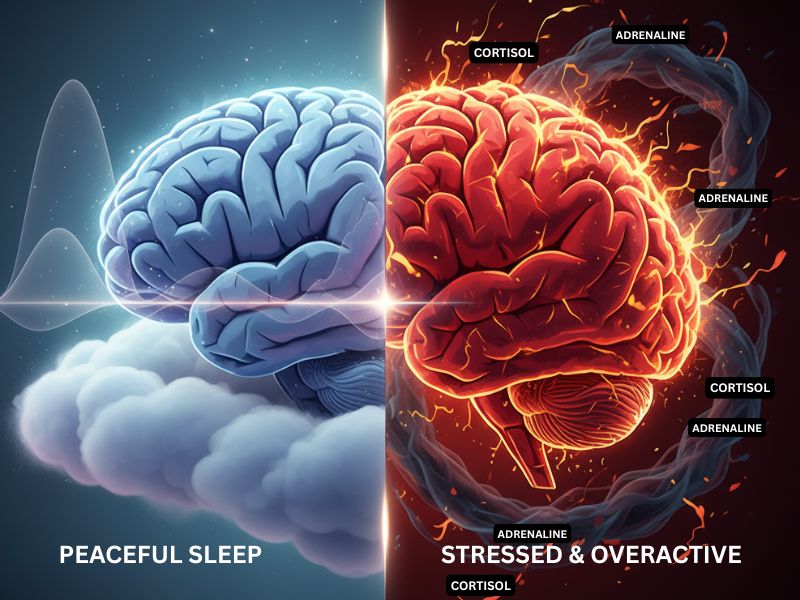
Your nighttime sugar cravings aren’t about discipline. They’re what happens when your sleep system gets completely hijacked by your stress response.
Picture this internal collision:
Your sleep brain is working overtime to keep you resting – maintaining steady energy levels and keeping stress hormones low. Meanwhile, your stress brain – activated by that brutal self-talk – is dumping cortisol into your system and wreaking havoc on everything your sleep brain is trying to accomplish.
Something has to give. Unfortunately, it’s usually your blood sugar that takes the hit.
As a result, this is exactly what happens when people ask “why am I hungry at 3am?” – it’s not true hunger. Rather, it’s a stress response masquerading as hunger.
The Midnight Chemistry Behind Nighttime Sugar Cravings
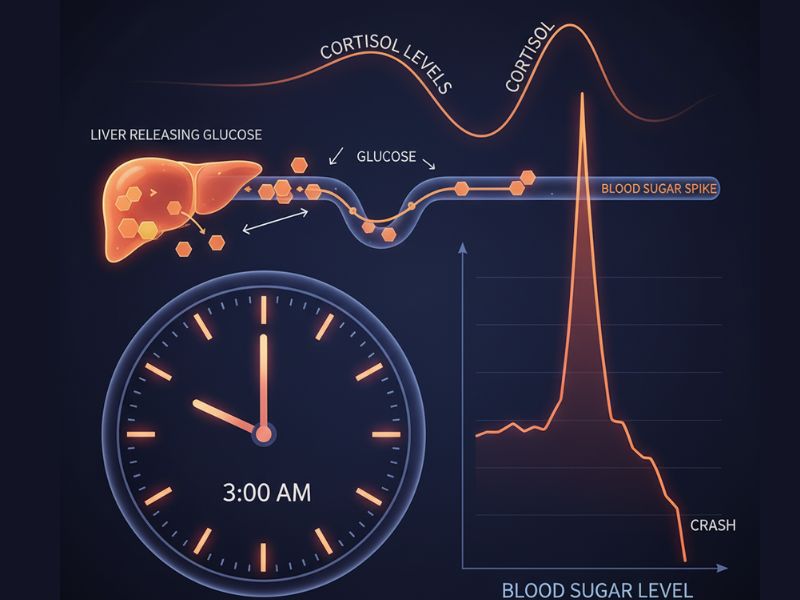
When you’re lying awake beating yourself up about food, here’s the hormonal mayhem unfolding inside you:
11 PM – 2 AM: Why Sugar Cravings Start at Night
Your stress hormone cortisol should be at rock bottom during these hours. Meanwhile, repair hormones should be getting to work. At the same time, blood sugar should be cruising along smoothly.
But self-criticism keeps cortisol pumping when it should be sleeping. In other words, every harsh thought – “I’m disgusting for what I ate” – triggers a stress response in your body.
2 AM – 4 AM: When Nighttime Hunger Becomes Overwhelming
Your liver does its normal overnight job of releasing a little glucose to maintain blood sugar while you sleep. However, elevated cortisol from stress thoughts turns this gentle release into a flood.
Your blood sugar shoots up, then crashes hard. Your brain hits the panic button: “Emergency fuel needed NOW!” As a result, this is the moment when nighttime hunger becomes overwhelming.
3 AM – 5 AM: The Sugar Craving Spiral Intensifies
You feel wired, anxious, and starving. The inner critic cranks up the volume: “Great, now I can’t even sleep right!” Consequently, more stress hormones flood your system. Furthermore, the overwhelming urge to eat something sweet for instant energy takes over.
This is why people wake up in the middle of the night hungry – cortisol has disrupted the normal overnight blood sugar rhythm.
Why Your Brain Screams for Sugar at 3 AM
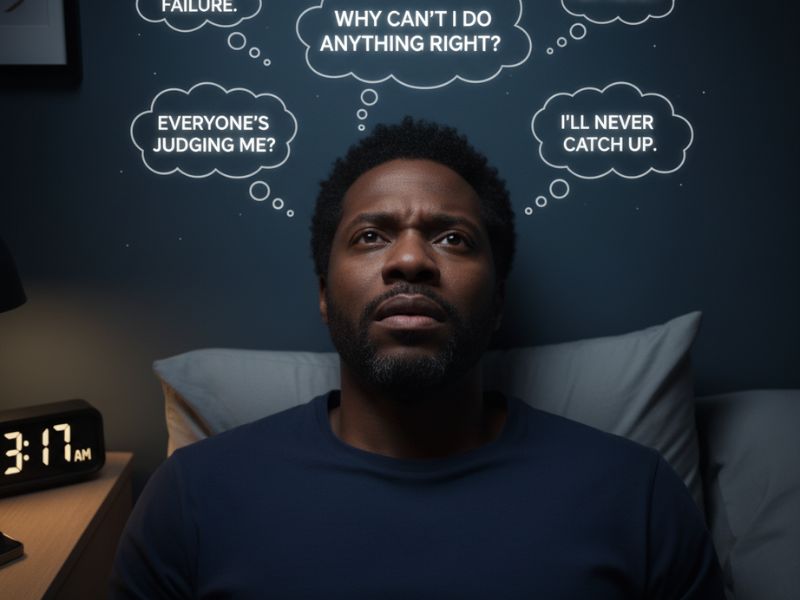
Those middle-of-the-night sugar cravings aren’t random. Instead, they’re your survival system responding to what feels like a genuine crisis.
When stress hormones mess with your overnight blood sugar, your brain truly believes you’re in danger. It doesn’t realize that the “threat” is just your own thoughts. In fact, all it knows is:
- Energy is all over the place
- Stress signals are blaring
- Quick fuel is needed immediately
- Sugar is the fastest fuel source available
Your brain isn’t sabotaging you – it’s trying to rescue you from a threat that exists only in your head. Therefore, this explains why you crave sugar at night specifically – nighttime is when cortisol should be lowest, so any elevation has maximum impact.
This same mechanism drives daytime eating patterns too. Learn why your brain works against you with food and how self-criticism triggers the biochemical cascade that creates food urgency.
Why You Crave Sugar at Night: The Self-Criticism Scripts
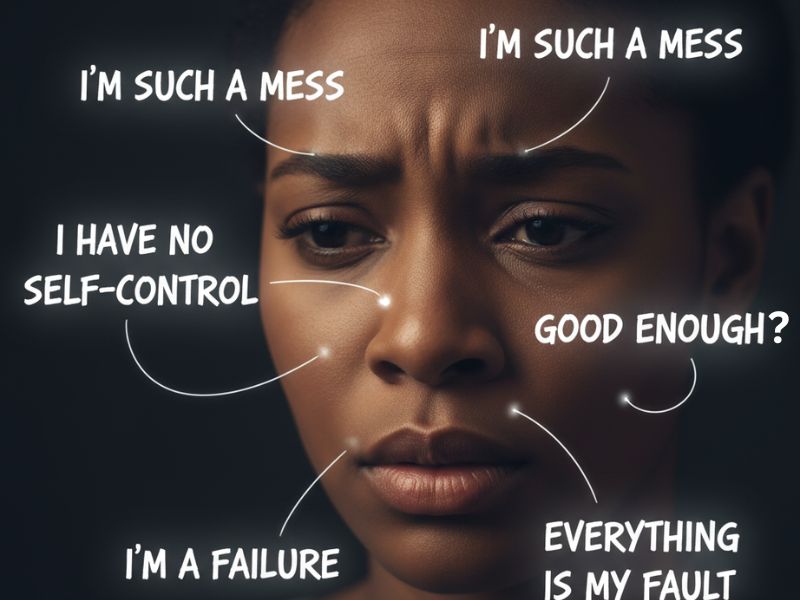
Through my own experience and working with countless people in Cape Town stuck in this cycle, I’ve identified the exact thoughts that trigger cortisol spikes at the worst possible time:
“I’m disgusting for what I ate today” → Stress response → Blood sugar chaos → 3 AM kitchen visit
“I have zero self-control” → Hormone cascade → Energy crash → Desperate nighttime hunger
“Tomorrow I’ll be perfect” → Pressure response → Sleep disruption → Middle-of-the-night cravings
“Everyone else can handle this, why can’t I?” → Shame spiral → Metabolic mayhem → Sugar-seeking behavior
The Pharmacist’s Revelation: It’s Your Stress System, Not Your Stomach
After years of studying how our bodies work and living through this cycle myself, I had a breakthrough: midnight sugar cravings are a stress response, not an appetite issue.
Your stress system is supposed to be offline at night, letting your other systems do their repair work. However, self-criticism keeps it running when it should be resting.
As a result, this creates a domino effect:
- Shattered sleep patterns
- Disrupted blood sugar processing
- Higher stress sensitivity the next day
- More vulnerability to self-criticism the following night
It’s not a personality flaw – it’s a stress pattern that can be interrupted. In fact, understanding this changed how I approached my own nighttime eating completely.
The Plot Twist: Your Midnight Thoughts Program Tomorrow’s Cravings
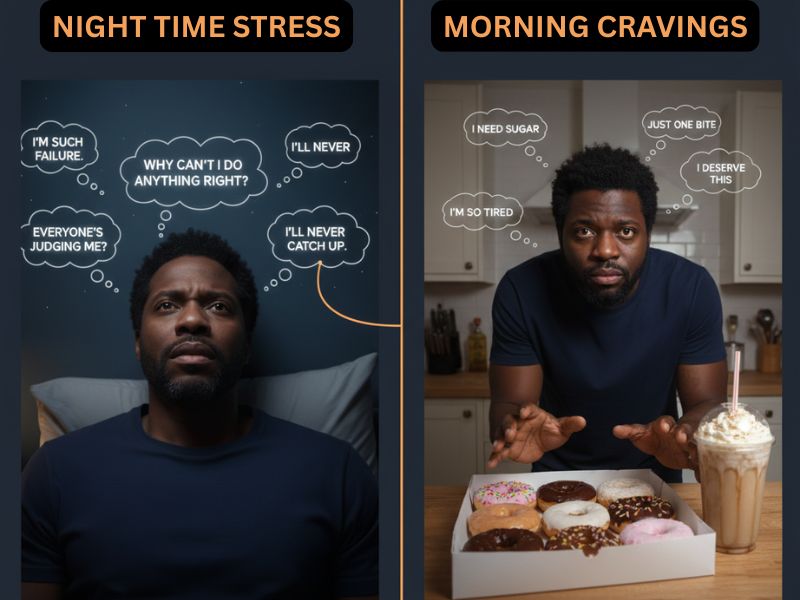
Here’s something that changed everything for me: the stress hormones you release at 3 AM don’t just wreck that night. They set up your hormone patterns for the entire next day.
When you flood your system with stress chemicals overnight, research shows you’ll experience:
- Significantly more sugar cravings the following day
- Reduced ability to process sugar properly for hours
- Increased hunger-driving hormones
- Much harder time making healthy food choices
Your harsh midnight thoughts are literally programming tomorrow’s cravings. This is why breaking the cycle of why you crave sugar at night is so important – it affects your entire next day.
These nighttime cortisol spikes often intensify specific sugar cravings driven by your inner critic throughout the following day.
Breaking the Nighttime Sugar Craving Cycle: The PAUSE Method

When you catch yourself in middle-of-the-night self-attack mode, try this gentle interruption:
P – Pause the thought spiral by simply noticing: “I’m being really hard on myself right now.”
A – Acknowledge what’s happening: “This criticism is creating stress in my sleeping body.”
U – Understand without judgment: “My mind is trying to help, but this isn’t the right time.”
S – Support your sleep: “I can think about this tomorrow when my brain is actually functional.”
E – Ease back toward rest: “Right now, my job is just to sleep.”
This isn’t about forcing positivity – it’s about protecting your sleep hormones from unnecessary stress activation. In fact, it’s a practical tool I’ve used countless times when my own mind started spiraling at 3 AM.
Ready to break the nighttime sugar spiral for good?
Your Body Is Talking: A Pharmacist’s Guide to Stopping Prediabetes is a free guide that explains exactly what’s happening — and what to do about it. No meal plans. No shame. Just clarity.
Why Your Body Craves Sugar During Sleep Disruption
Those 3 AM sugar spirals feel like complete betrayal, but your body is actually trying to protect you. In reality, it’s responding exactly as designed to what it perceives as genuine danger.
The real breakthrough happens when you realize that changing how you talk to yourself at night can literally change how your metabolism functions.
Your body isn’t broken, and you’re not lacking willpower. You’re having a completely normal stress response that can be gently redirected.
What This Means for You
If you’re asking yourself “why do I crave sugar at night?” – now you know. It’s not about being weak or lacking discipline. It’s about cortisol levels that should be low staying elevated because of harsh self-talk.
The path out of the midnight sugar spiral starts with understanding that your harshest critic – that voice in your head – doesn’t have to run the show at 3 AM.
Sweet dreams really are made of self-compassion, not self-criticism.

Important Note
While stress and self-criticism are common causes of nighttime hunger and sleep disruption, persistent sleep problems can also indicate underlying medical conditions like sleep apnea, acid reflux, or blood sugar disorders. If you experience frequent nighttime waking, unusual hunger patterns, or concerns about your sleep quality, consult with a healthcare provider to rule out other causes.
Many people don’t realize chronic stress patterns can contribute to insulin resistance. Learn how to recognize insulin resistance signs at home before these nighttime patterns compound metabolic issues.
Medical Disclaimer
This blog post is for educational and informational purposes only and is not intended as medical advice. I am a licensed pharmacist sharing evidence-based health information, but I am not your healthcare provider.
If you have been diagnosed with insulin resistance, prediabetes, diabetes, or any other medical condition, consult with your doctor or qualified healthcare professional before making changes to your diet, exercise routine, or medication regimen. Individual health circumstances vary, and what works for one person may not be appropriate for another.
The information provided here is based on current scientific understanding and clinical evidence, but it does not replace personalized medical guidance from a healthcare provider who knows your complete medical history.
If you experience any concerning symptoms or have questions about your specific health situation, please seek professional medical advice.
Reference
Leproult, R., Copinschi, G., Buxton, O., & Van Cauter, E. (1997). “Sleep loss results in an elevation of cortisol levels the next evening.” Sleep, 20(10), 865-870. https://pubmed.ncbi.nlm.nih.gov/9415946/