

You’re getting dressed for your shift, catch a glimpse of yourself in the mirror, and that familiar voice starts: “Look at that belly. You’re disgusting. How did you let yourself get this bad?”
Twenty minutes later, you’re inhaling a muffin on your way to work, wondering how your “healthy eating day” derailed before 9 AM.
If you’re wondering how to manage stress eating, you’re asking the right question. But here’s what most advice misses: that mirror moment just triggered a biochemical chain reaction that will affect your cravings for the next 6-8 hours.
As a pharmacist who’s counseled hundreds of patients on how to manage stress eating and prediabetes, I’ve noticed something critical. It’s not about willpower. It’s about understanding what triggers emotional eating in the first place – and the biggest trigger is one nobody talks about.
What Triggers Emotional Eating: The Hidden Mirror Moment
The Trigger Nobody Talks About
When someone asks me what triggers emotional eating, I give them an answer they’re not expecting: your mirror.
It’s not the food in your kitchen, your stressful job, or even your actual stress levels.
Your mirror – and more specifically, what you say to yourself when you look in it.
That moment of body shame isn’t just psychological commentary. It’s a metabolic trigger as powerful as skipping a meal or drinking three cups of coffee on an empty stomach.
Most stress eating advice focuses on external stressors: work pressure, family conflict, financial worry. All valid. But they miss the internal stressor that happens multiple times every single day – the moment you criticize your own reflection.
Understanding how stress affects blood sugar is crucial because external stressors and internal self-criticism create the same cortisol response that disrupts glucose control.
Here’s why this matters: your nervous system can’t tell the difference between actual social rejection and your own harsh judgment of your appearance. Both create the exact same physiological crisis response.
Self Critical Thoughts Examples That Spike Your Stress

Not all mirror moments are created equal. Some self-critical thoughts create bigger metabolic disruptions than others.
High-impact shame triggers:
– “I’m disgusting/gross/fat”
– “I hate my body”
– “Look at that belly/face/arms”
– “Nobody could find this attractive”
– “I’m so out of shape”
Medium-impact triggers:
– “I need to lose weight”
– “I look terrible today”
– “This doesn’t fit right anymore”
– “I used to look so much better”
Chronic low-level triggers:
– Avoiding mirrors entirely
– Criticizing specific body parts while getting ready
– Comparing your body to others
– Focusing only on “flaws”
I learned about this the hard way. Ten years ago, I was standing in my own bathroom, pulling at my shirt, thinking “You look pregnant, not professional.” Thirty minutes later, I was stress-eating biscuits in the pharmacy storage room.
That’s when I started connecting the dots between my patients’ harsh self-talk and their unstable blood sugar patterns. The science was there – I just hadn’t been looking at body shame as a metabolic variable.
The Science Behind Stress Eating: Why Managing It Starts With Your Mirror
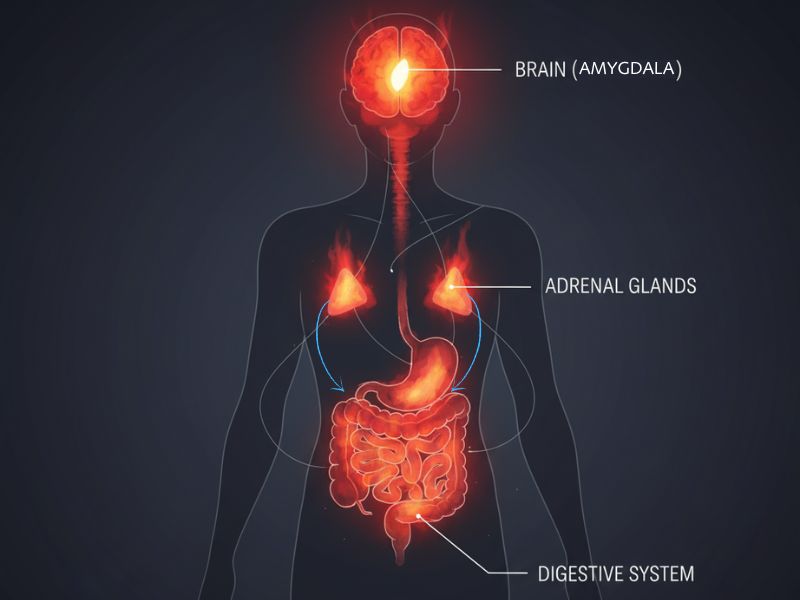
What Happens in Your Body During Mirror Criticism
Here’s what most people don’t understand: body shame activates what researchers call the “social threat response.”
This is an evolutionary survival mechanism designed to protect you from rejection by your tribe. In ancient times, being cast out from your community meant death. So your body developed powerful systems to detect and respond to threats to your social standing.
The problem? Your body responds to your own criticism as if it’s actual social rejection.
When you look in the mirror and think “I’m disgusting,” your brain processes this as: “I’m at risk of being rejected by my tribe. This is a survival emergency.”
Medical Disclaimer: What follows is a theoretical framework exploring potential connections between psychological stress and metabolic health. While stress is scientifically established to impact glucose control, the specific mechanisms, timelines, and magnitudes described here represent conceptual modeling rather than definitively proven physiological pathways. This content is for educational purposes only and should not replace professional medical advice. Always consult with qualified healthcare providers regarding your individual health concerns.
The Four-Phase Biochemical Cascade
Think of this as the biological domino effect that starts with mirror criticism and ends with your hand in the biscuit tin.
Phase 1: Social Threat Detection (0-15 seconds)
Your anterior cingulate cortex processes the self-attack as social rejection. The amygdala sounds the alarm: “Identity under attack!” Within seconds, stress hormones begin mobilizing. Your body prepares for the metabolic equivalent of war.
Phase 2: Cortisol Spike (15 seconds – 3 minutes)
Cortisol levels can spike dramatically – potentially 60% higher than baseline. Your HPA axis (the stress control center in your brain) goes into overdrive. Inflammatory signals flood your system. Your liver starts dumping glucose into your bloodstream as “emergency fuel.”
It’s like the stress of sitting in N2 traffic when you’re late for work – except the traffic jam is happening inside your body, triggered by your own thoughts.
Phase 3: Glucose Flood and Insulin Resistance (3-30 minutes)
Blood sugar swings wildly as insulin tries to manage the glucose your liver just released. Your cells temporarily become less responsive to insulin. Fat storage hormones activate because your body thinks famine might be coming. Hunger signals intensify dramatically.
This is why you can feel genuinely, physically hungry thirty minutes after criticizing yourself in the mirror – even if you just ate breakfast.
Phase 4: Irresistible Cravings (30 minutes – 6 hours)
Your brain interprets the blood sugar chaos as starvation. Dopamine pathways activate, seeking immediate reward and comfort. The decision-making areas of your brain essentially go offline. You feel an almost irresistible urge to eat something sweet or comforting.
This isn’t weakness. This is biology.
These nighttime cravings often intensify when mirror moments happen late in the day. If you find yourself particularly vulnerable to sugar cravings at night, the evening mirror moment might be triggering a cascade that peaks hours later.
How to Manage Stress Eating: Breaking the Shame Cycle
Recognize Your Personal Stress Eating Triggers
Before you can manage stress eating, you need to identify when it’s actually happening. Most people think stress eating only happens during obvious stress – after a fight, during work pressure, when bills are due.
But for many people, the most frequent stress eating trigger is invisible: it’s the body shame that happens while getting dressed, checking your reflection, or noticing how your clothes fit.
Common mirror-moment timing:
– First thing in the morning (getting ready for work)
– After showering (seeing yourself naked)
– Getting dressed (clothes feeling tight)
– Throughout your Woolworths or Checkers shift (catching your reflection in store windows)
– Before social events (trying on different outfits)
– Late at night (final bathroom mirror check)
Here’s a practical approach: for three days, just notice. Don’t try to change anything. Just notice when you have critical thoughts about your body, and notice what you eat in the 30 minutes to 6 hours afterward.
You’re not tracking this to shame yourself. You’re tracking it to see the pattern – because once you see it, you can interrupt it.
The MIRROR Method for Managing Stress Eating
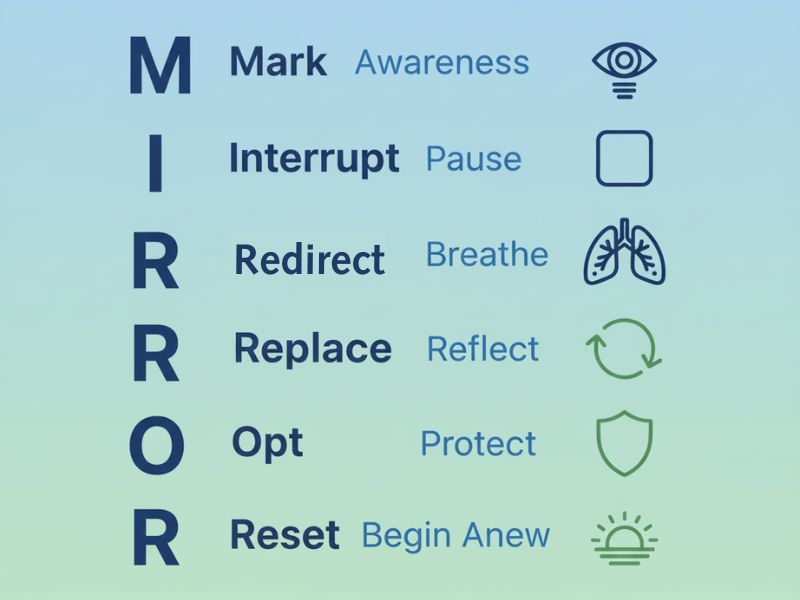
This is the practical tool I teach patients when they ask how to manage stress eating triggered by body shame. It interrupts the biochemical cascade before it reaches the craving stage.
M – Mark the moment
The instant you notice a critical thought about your body, say internally: “I’m having a shame thought right now.”
I – Interrupt the cascade
Say out loud (yes, actually speak): “This is triggering my stress response.”
Speaking engages different brain pathways than thinking, which helps interrupt the automatic pattern.
R – Redirect your biology
Take three deep belly breaths. This activates your parasympathetic nervous system (your body’s calm-down system) and starts countering the cortisol spike.
R – Replace with neutral facts
Instead of criticism, state a neutral fact: “This is my body today. It’s working to keep me alive and healthy.” You’re not forcing positivity – you’re providing accurate information to your nervous system.
O – Opt for metabolic protection
Say: “I’m going to support my blood sugar stability by speaking to my body with respect.”
This reminds your brain that you’re making a choice for your metabolic health, not just trying to “think positive.”
R – Reset your day
Remind yourself: “This moment doesn’t define the next 8 hours. I can start fresh right now.”
The entire MIRROR method takes 60-90 seconds. That’s less time than it takes to eat the muffin – but it prevents the 6-hour craving cascade that follows.
Want the complete framework for breaking the shame-stress-eating cycle?
Your Body Is Talking: A Pharmacist’s Guide to Stopping Prediabetes is a free guide that explains exactly what’s happening — and what to do about it. No meal plans. No shame. Just clarity.
Practical Strategies for Managing Negative Inner Thoughts
The MIRROR method works, but sometimes you need additional strategies for managing negative inner thoughts in the moment.
The “I notice” technique:
Instead of “I hate my stomach,” try “I notice I’m having the thought that I hate my stomach.”
This tiny shift creates psychological distance. You’re observing the thought rather than being consumed by it.
Body neutrality over body positivity:
You don’t have to love your body or even like it. You just have to stop treating it like the enemy.
Body neutrality sounds like: “My body is doing its job today” or “This is the body I’m working with right now.”
Emergency phrases for high-stress moments:
When the shame spiral is intense, have these ready:
– “My body is not the problem. The criticism is the problem.”
– “I’m responding to a threat that only exists in my thoughts.”
– “This feeling will pass. The muffin won’t make it pass faster.”
As a pharmacist, I tell patients this: if you wouldn’t say it to someone you’re counseling on their medication, don’t say it to yourself in the mirror. You’d never tell a patient “You’re disgusting” – so why is it acceptable to say it to yourself?
How to Manage Stress Eating at Work

The Retail Worker’s Reality
If you work long shifts at Woolworths, Checkers, or any retail environment, you face unique challenges with stress eating.
You’re on your feet all day. You’re dealing with demanding customers, especially during peak shopping seasons. Your uniform might feel tighter after lunch. The break room is full of tempting snacks. You’ve got limited time to eat, so you eat fast. You’re exhausted by the end of your shift.
All of this creates the perfect storm for stress eating – and mirror moments make it worse.
The morning mirror moment before your shift can set you up for an entire day of poor food choices. One critical thought about how your uniform fits can trigger cravings that last your whole shift.
On-Shift Protection Strategies
Morning mirror routine before work:
Build in 5 extra minutes before leaving for work. After you’re dressed, do one full MIRROR method cycle before you leave your house. This sets your metabolic tone for the day.
Bathroom mirror resets during shift:
When you use the bathroom at work, avoid the mirror if you’re in a vulnerable state. If you do look, have a neutral phrase ready: “Halfway through my shift, my body is working hard.”
Pre-pack shame-proof snacks:
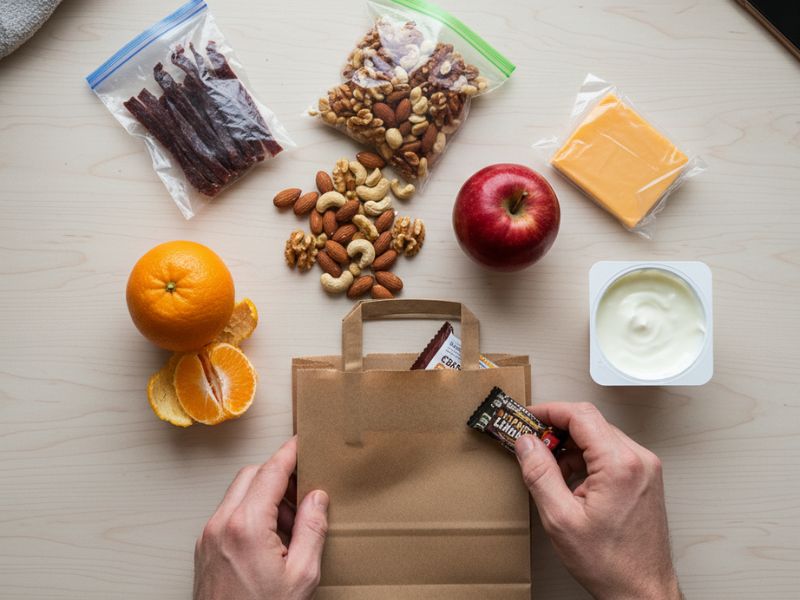
Stress eating at work often happens because the available food feels “safe” or comforting. Pack snacks at home when you’re in a calm state – things that support your blood sugar without triggering shame.
Examples: nuts, fruit, biltong, cheese, yogurt. Whatever works for your body and doesn’t come with guilt afterward.
End-of-shift decompression:
Before you get in your car to drive home, take 2 minutes. Sit. Breathe. Do a quick MIRROR reset. This prevents the “I survived today, I deserve a treat” stress eating that happens on the drive home.
Many of my patients in Cape Town work retail. This isn’t theoretical – these strategies come from real conversations about what actually works when you’re exhausted, stressed, and facing the N2 traffic home.
Why Traditional Advice About Managing Stress Eating Falls Short
What Generic Advice Misses
You’ve probably read a dozen articles about stress eating. They all say the same things:
– “Just use willpower”
– “Keep a food journal”
– “Identify your triggers”
– “Practice mindfulness”
– “Remove tempting foods from your house”
This advice isn’t wrong. It’s just incomplete.
“Just use willpower” ignores biology. When cortisol is flooding your system and your blood sugar is crashing, willpower is like trying to stop a train with your bare hands. The biological drive to eat is stronger than conscious decision-making.
“Keep a food journal” can add shame.For many people, tracking food becomes another source of criticism. You write down what you ate, feel disgusted, and trigger another shame spiral.
“Identify your triggers” sounds simple but body shame stays invisible.** Most people can identify external triggers (work stress, relationship conflict). But they don’t recognize that their own self-criticism is the most frequent trigger they face.
“Practice mindfulness” is hard when cortisol is flooding.** Mindfulness is powerful – but it’s nearly impossible to be mindful when your brain is in crisis mode. You need to interrupt the cascade before mindfulness can work.
“Remove tempting foods” doesn’t address why you’re seeking them.** You can clear out your kitchen, but if you’re triggering stress eating responses multiple times a day through body shame, you’ll find food somewhere.
The Pharmacist’s Perspective on Stress and Metabolism
I’ve spent years counseling patients on diabetes medications. I help people understand how metformin works and why their blood sugar spikes after certain meals.
But I kept seeing a pattern with patients who struggled despite doing everything “right” with their medication and diet.
They shared one common factor: harsh, persistent self-criticism about their bodies.
The patients who spoke cruelly to themselves about their weight, their appearance, their “lack of discipline” – these were often the same patients with the most unstable glucose patterns.
This connection between self-criticism and blood sugar instability is why understanding self-sabotage with food goes beyond willpower—it’s about recognizing how harsh self-talk triggers biological responses.
This led me to develop a theoretical framework: body shame functions similarly to other chronic stressors that are known to impact metabolic health.
When someone engages in frequent self-criticism, they may be chronically activating stress response systems. Research shows that chronic psychological stress can influence cortisol patterns, potentially affect insulin sensitivity, contribute to glucose variability, and promote inflammatory states.
Many people don’t realize they’re dealing with insulin resistance until these patterns become severe—learn how to recognize insulin resistance signs at home before chronic stress compounds the problem.
Clinical note: These are observational patterns from practice, not controlled research findings. Many factors influence blood sugar control. Addressing psychological stress is one potential component of comprehensive health management, not a standalone solution.
But here’s what I know for certain: stress management is metabolic management. You cannot separate your psychology from your physiology. They’re not two different systems – they’re one integrated system.
When you manage the psychological stress of body shame, you’re also managing the metabolic stress it creates.
Long-Term Success: From Managing to Mastering

The 30-Day Mirror Reset Challenge
Learning how to manage stress eating is a skill, not a personality trait. Like any skill, it takes practice.
Here’s a realistic 30-day approach:
Week 1: Awareness only
Just track your mirror moments. Notice when you have critical thoughts. Notice what you eat afterward. No judgment, no fixing – just noticing. This builds your awareness of the pattern.
Week 2: Add the MIRROR method
Start using the MIRROR method once per day, during your most predictable mirror moment (usually morning). Don’t try to catch every moment – just practice with one consistent moment daily.
Week 3: Morning routine solidification
By now, your morning MIRROR practice should feel somewhat automatic. Add a second practice point – maybe your lunch break or getting ready for bed.
Week 4: Pattern analysis and adjustment
Look back at your month. When did the MIRROR method work well? When did it fail? What situations need additional support? Adjust your approach based on what you’ve learned about your patterns.
After 30 days, you won’t have “cured” stress eating. But you’ll have a practical tool that interrupts the body shame trigger before it derails your entire day.
When to Seek Additional Support
The MIRROR method helps manage stress eating triggered by body shame. But sometimes you need more support.
Consider reaching out to a professional if:
– Body shame thoughts are persistent and interfere with daily life
– Eating patterns feel completely out of your control
– You’re experiencing signs of depression or anxiety
– Mirror avoidance is affecting your self-care
– You have a history of eating disorders
Your GP can provide referrals to psychologists who specialize in body image concerns or registered dietitians who use shame-free approaches. These professionals can offer personalized support beyond self-help strategies.
Remember: seeking support isn’t failure. It’s recognizing that some struggles need more than self-help strategies.
Medical Disclaimer
This content is for educational and discussion purposes only and should not replace professional medical advice. Always consult with qualified healthcare providers regarding your individual health concerns and stress management.
The framework presented here explores potential connections between psychological stress and eating behavior. While stress is scientifically established to impact eating patterns and metabolic health, the specific mechanisms, timelines, and magnitudes described represent conceptual modeling rather than definitively proven physiological pathways.
Individual responses to psychological stress vary greatly, and many factors influence eating behavior including genetics, overall health status, medications, mental health, and life circumstances. The strategies discussed should be considered as one potential component of a comprehensive approach to health, not as standalone medical treatment.
References
This article draws on established research in stress physiology, eating behavior psychology, and metabolic health. The theoretical framework presented synthesizes knowledge from multiple scientific disciplines.
Core scientific concepts referenced:
– The physiological stress response (HPA axis activation and cortisol release)
– Psychological stress and eating behavior patterns
– Weight stigma and its physiological impacts
– The relationship between chronic stress and metabolic health
– Self-criticism as a form of psychological stress
While the specific “mirror moment” cascade represents a conceptual model rather than a single proven pathway, the underlying science of stress-triggered eating behavior is well-established in peer-reviewed literature.
For readers interested in the scientific foundations of this content, key research areas include stress-induced cortisol responses, emotional eating triggers, and the mind-body connection in metabolic regulation.

Conclusion
Now you know how to manage stress eating from a completely different angle – by addressing the hidden trigger that most advice ignores.
You’re not weak for struggling with stress eating, and you’re not lacking discipline. You’re responding to a biological crisis signal that gets triggered every time you criticize your reflection.
The mirror moment is powerful – but so is your ability to interrupt it.
Tomorrow morning, when you catch your reflection and that critical voice starts, try the MIRROR method. Just once. See what happens in the hours that follow.
Learning how to manage stress eating isn’t about perfection. It’s about interrupting the shame-stress-craving cycle one moment at a time.
Your body isn’t the enemy. It’s been trying to protect you from threats that exist only in your thoughts.