
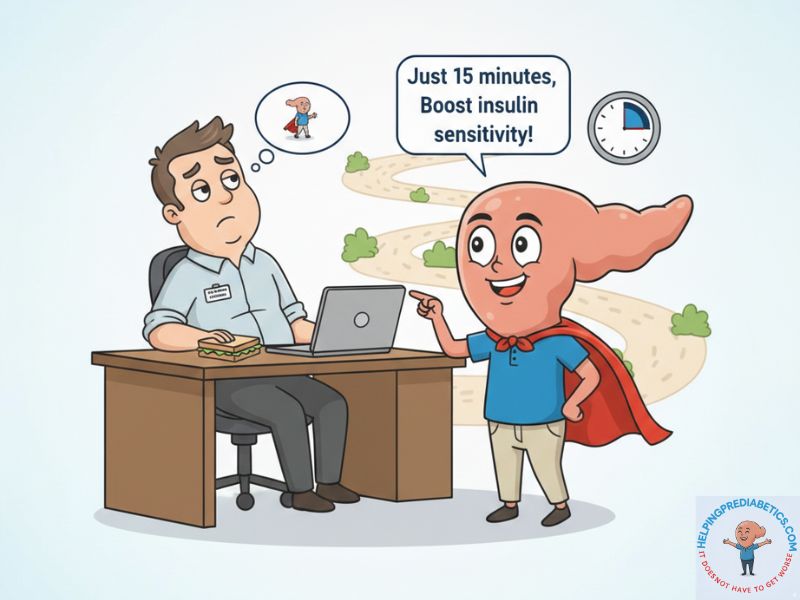
You finish your lunch shift. You’ve read that exercise helps with prediabetes, but between work stress and exhaustion, the gym isn’t happening.
What you don’t know: walking after eating—right now, for just 15 minutes—can lower your blood sugar more effectively than the same workout done at a random time later.
The timing matters more than the intensity. Walking after eating catches glucose as it enters your bloodstream, preventing the damaging spikes that lead to Type 2 diabetes.
As a pharmacist for 18+ years, I’ve watched thousands of people get told to “exercise more” without anyone explaining when to move matters as much as moving itself.
This isn’t about adding another workout to your schedule. It’s about strategically timing a simple walk to intercept blood sugar at its most vulnerable moment.
Why Walking After Eating Works Better Than Random Exercise
Most exercise advice ignores timing completely. “Get 150 minutes of activity per week” tells you nothing about when that activity does the most good. For blood sugar control, timing is everything.
What Happens to Blood Sugar When You Walk After Eating
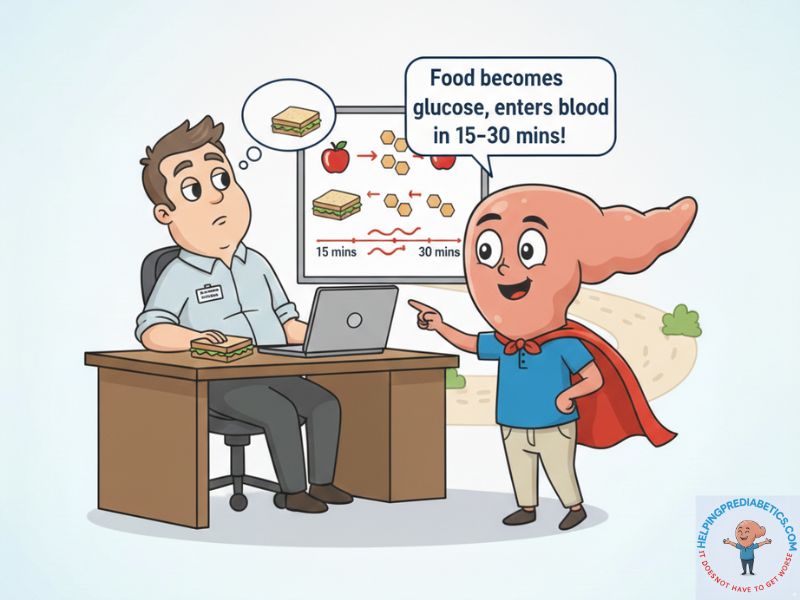
When you eat, glucose enters your bloodstream within 15-30 minutes. Your pancreas releases insulin to shuttle that glucose into your cells for energy or storage. To understand why this matters, learn how insulin becomes the villain in insulin resistance.
In insulin resistance, your cells don’t respond well to insulin’s signal. As a result: glucose stays elevated in your blood, damaging blood vessels, nerves, and organs over time.
Your blood sugar typically peaks 30-90 minutes after eating. That spike—repeated three times daily for years—is what drives prediabetes into Type 2 diabetes.
How Walking After Eating Catches the Spike
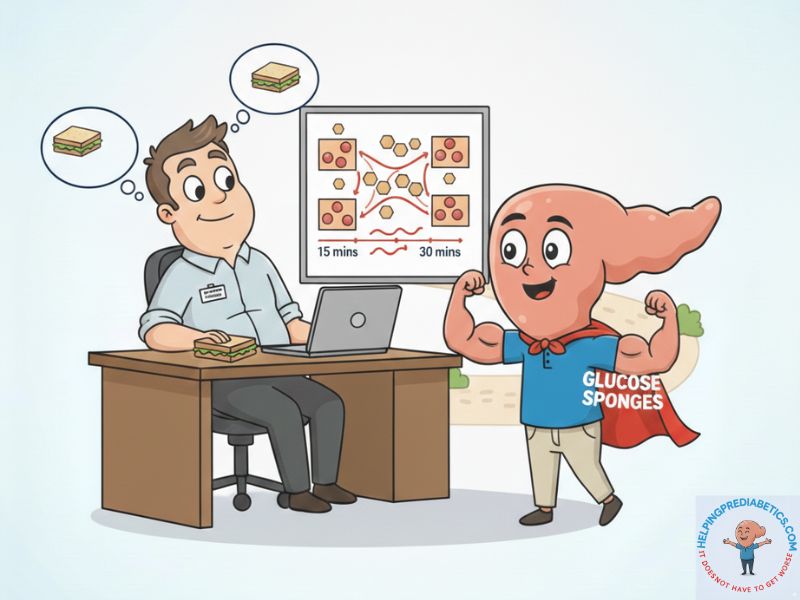
Here’s what changes when you walk after eating: your muscles need fuel. When muscles contract during movement, they pull glucose directly from your bloodstream through an insulin-independent pathway—meaning they can take up glucose even when insulin signaling is impaired.
This is critical for insulin resistance. Even when your cells aren’t responding well to insulin, contracting muscles use this alternative pathway to grab glucose and use it for fuel. This works alongside your body’s insulin response, not instead of it, providing an additional mechanism for blood sugar control.
But the timing window is narrow. Walking two hours after eating means you’ve likely missed the highest peak, but you can still lower the elevated glucose that remains. Walking immediately after—or within 30 minutes—intercepts glucose before it peaks for maximum benefit.
Research shows post-meal walks reduce glucose spikes more effectively than the same walk at random times during the day. It’s not about burning more calories. It’s about catching glucose at the moment it enters your system.
Why Post-Meal Walking Works: The Muscle Glucose Advantage
Think of your muscles as glucose sponges. When they contract, they create a vacuum that pulls sugar from your blood. This works even in severe insulin resistance—your muscles don’t care if your insulin signaling is broken.
A 15-minute walk around your workplace parking lot after lunch does more for your blood sugar than a 45-minute evening gym session that happens three hours after dinner. The gym session has other benefits—strength, cardiovascular fitness, stress relief. But for blood sugar control specifically, timing beats intensity.
How Long to Walk After Eating (The Research-Backed Answer)
“How long do I need to walk?” is the first question everyone asks. You want the minimum effective dose—the least time investment for maximum blood sugar benefit.
How Long to Walk After Eating: Minimum 15 Minutes
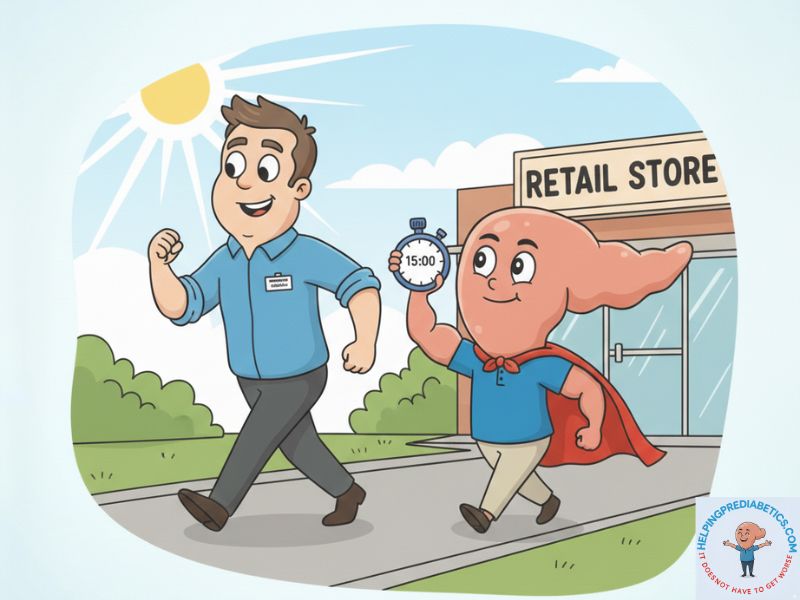
Studies consistently show that 15 minutes of walking after meals significantly reduces post-meal glucose spikes. This isn’t a gentle suggestion—15 minutes crosses a threshold where muscle glucose uptake becomes measurable and meaningful.
If you work retail or an office job, 15 minutes is doable. It’s half your lunch break. About three loops around the building. It’s the difference between blood sugar chaos and blood sugar control.
Optimal Duration: 20-30 Minutes
If you have time, use it. Walking for 20-30 minutes after eating produces greater spike reduction and more sustained blood sugar control throughout the afternoon. The longer you move, the more glucose your muscles consume.
But don’t let “optimal” prevent “good enough.” If 15 minutes is what you have, 15 minutes is wildly effective.
Walking After Eating: Something Is Better Than Nothing
Even 10 minutes helps. Even 5 minutes is better than sitting. The relationship between post-meal movement and blood sugar isn’t all-or-nothing.
It’s dose-dependent: more movement = more benefit, but any movement beats none.
Consistency matters more than perfection. Seven days of 12-minute walks will transform your blood sugar more than two days of 45-minute walks.
Your Results Will Vary
The exact glucose reduction you experience depends on several factors: your current fitness level, how severe your insulin resistance is, and what you ate. A high-carb meal (pasta, bread, rice) will spike your blood sugar more than a balanced meal with protein and fat, so you’ll see more dramatic drops after carb-heavy meals.
This doesn’t mean walking after protein-heavy meals is wasted—you’re still building insulin sensitivity. It just means the immediate glucose drop will be less obvious.
Post-meal walks are powerful—but they’re one piece of reversing prediabetes.
Nutrition is your foundation. Portion control, balanced meals, and reducing refined carbs work synergistically with post-meal movement—what you eat and when you move after eating both matter. Discover which foods reverse prediabetes naturally alongside your post-meal walks.
Your Body Is Talking: A Pharmacist’s Guide to Stopping Prediabetes is a free guide that explains exactly what’s happening — and what to do about it. No meal plans. No shame. Just clarity.
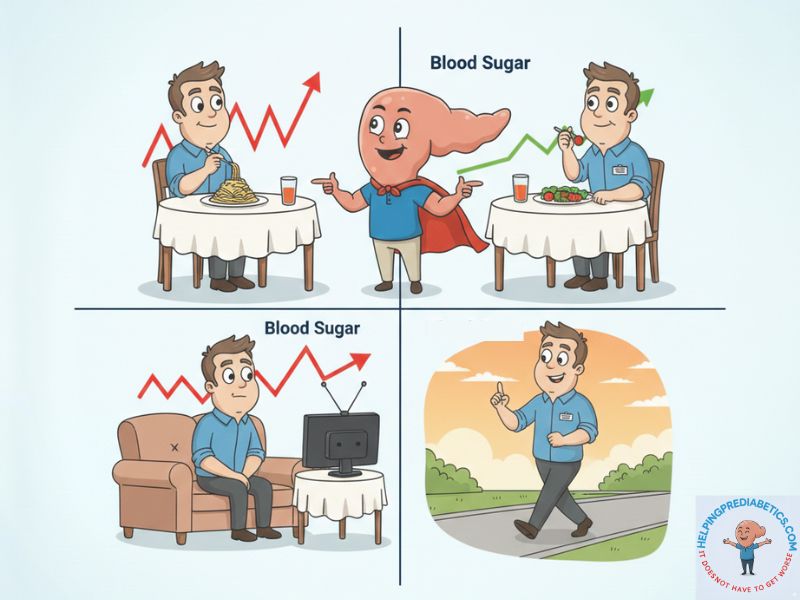
When to Walk After Eating: Timing Is Everything
You know walking after eating works. Now: exactly when should you start walking?
The 15-30 Minute Window
Ideally, start your walk 15-30 minutes after your first bite. Why this window? Because blood sugar begins rising within 15 minutes of eating and peaks between 30-90 minutes post-meal. Starting in this window maximizes your glucose-lowering effect—but walking anytime within 90 minutes post-meal still provides meaningful benefit.
If you start walking immediately after eating—while still chewing your last bite—you might feel uncomfortable. Your stomach is full, blood is being diverted to digestion, and movement feels awkward. Waiting 15-20 minutes lets digestion start while still catching the glucose spike early.
What If You Can’t Walk After Eating Immediately?
Life happens. Meetings run late. Your boss needs something. The weather turns dangerous. If you can’t walk in the 15-30 minute window, walk anyway.
A 60-minute post-meal walk still helps—it just provides less spike reduction. You’ve missed the peak, but you’re still improving insulin sensitivity and burning glucose. Late walking is maintenance benefit, not peak intervention.
Don’t skip the walk just because timing isn’t perfect. Imperfect timing beats no movement.
Which Meal Matters Most?
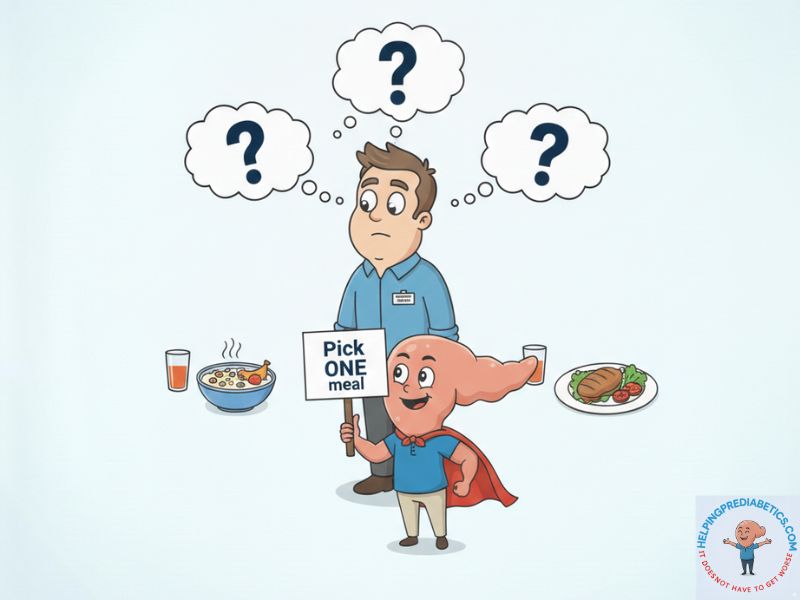
All three meals benefit from post-meal walks. But if you can only walk after one meal, which should it be?
Dinner often produces the largest glucose spike and it’s typically your biggest meal, followed by sedentary evening hours on the couch. A post-dinner walk prevents that spike from lingering all night.
Breakfast sets your metabolic tone for the day. Morning blood sugar control improves insulin sensitivity for your next meal. Therefore, starting the day with a win creates momentum.
Lunch is most practical for working people. You’re already taking a break. Walking around the block fits naturally into your day without requiring extra schedule coordination.
Pick the meal you can walk after most consistently. Consistency beats optimization.
Walking After Eating vs Other Exercise Timing
Walking after meals doesn’t replace other exercise—it complements it. Each timing strategy serves a different purpose.
Post-Meal Walk vs Morning Fasted Cardio
Fasted morning cardio—exercising before breakfast—improves fat burning and insulin sensitivity. It trains your body to access stored energy efficiently.
Post-meal walking controls glucose spikes in real-time. It’s immediate blood sugar management, not metabolic training.
Both are valuable. They do different jobs. If you only have time for one, prioritize post-meal walking for blood sugar control.
Post-Meal Walk vs Evening Gym Session
Gym sessions build muscle, improve cardiovascular fitness, and reduce stress. They’re essential for overall health and long-term insulin sensitivity.
But a 6 PM gym session doesn’t control your breakfast spike at 8 AM, your lunch spike at 1 PM, or your dinner spike at 7 PM. It’s a different intervention entirely.
Don’t choose between post-meal walks and gym workouts. Do both if possible. If forced to choose, post-meal walks deliver more direct blood sugar benefit for people with prediabetes.
The Role of Resistance Training
While post-meal walks control glucose spikes in real-time, resistance training (lifting weights, bodyweight exercises) builds muscle mass—and muscle is your body’s largest glucose storage site. More muscle = better long-term insulin sensitivity.
Aim for 2-3 resistance training sessions per week alongside your post-meal walks. You don’t need a gym—push-ups, squats, and planks at home build meaningful muscle.
Post-meal walks and resistance training aren’t competitors. They’re partners. Walks manage today’s blood sugar. Resistance training builds tomorrow’s metabolic capacity.
For more on how resistance training reverses insulin resistance and complements post-meal walking, see exercise for insulin resistance.
Why This Specific Timing Often Gets Overlooked (Walking After Eating Timing)
Most doctors give generic “exercise more” advice. What they often miss: the timing specificity that makes the same 15 minutes exponentially more effective.
This isn’t their fault—medical training focuses on pathology and pharmacology, not applied behavioral physiology. They’re trained to prescribe medication, not optimize movement timing.
As a pharmacist for 18+ years, I’ve seen this gap repeatedly. The patients who reverse prediabetes aren’t exercising more than those who don’t—they’re exercising smarter, with better timing.
How to Make Walking After Eating a Habit

Knowing what works doesn’t create behavior change. You need a system that removes friction and builds consistency.
Start Walking After One Meal First
Don’t try to walk after all three meals immediately. That’s a recipe for overwhelm and failure.
Pick your most consistent meal—usually lunch or dinner—and commit to walking after that meal only. Build success with one meal for two weeks, then consider adding a second.
One consistent post-meal walk beats three inconsistent attempts.
Make Walking After Meals Stupid Simple
Remove every decision between eating and walking:
- Same route every day – Decision fatigue kills habits. Walking the same loop requires zero mental energy.
- Don’t change clothes – Walk in whatever you’re wearing. Requiring a wardrobe change adds friction you don’t need.
- Bad weather? Walk inside a shopping centre. Rain isn’t an excuse—it’s a venue change.
The easier the walk, the more likely you’ll do it.
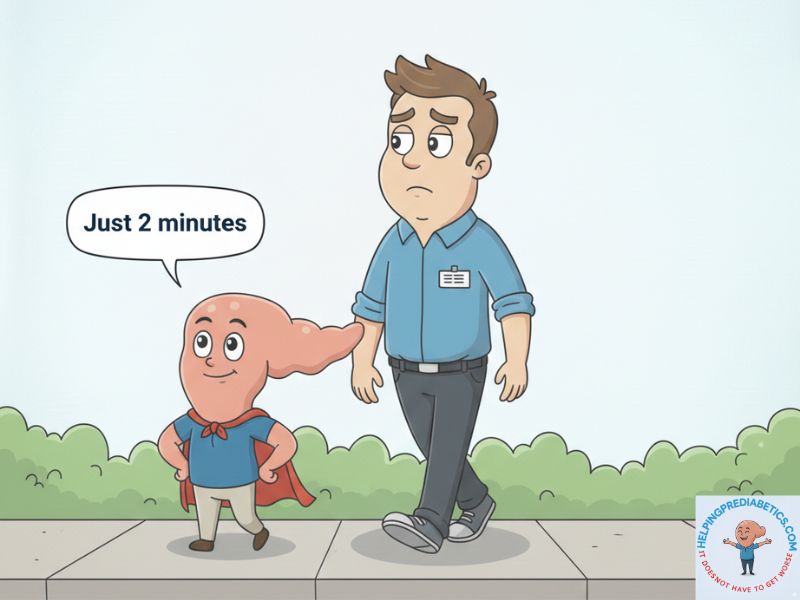
The 2-Minute Rule
On days when you’re exhausted and resistance is high, commit to just 2 minutes. Put on shoes, walk out the door, walk for 2 minutes.
Once moving, you’ll usually continue to 15 minutes. But even if you don’t—even if you only walk 2 minutes—you’ve maintained the habit. You didn’t break the chain.
The 2-minute rule removes the “too tired” excuse. You’re never too tired for 2 minutes.
Real-World Barriers to Walking After Eating (And Solutions)

Theory is easy. Reality has obstacles. Here’s how to solve the most common barriers.
“I Work in an Office—I Can’t Just Leave”
You don’t need to leave the building:
- Stairs – Walk up and down three flights of stairs. Five minutes of stair walking = significant glucose uptake.
- Different floor bathroom – Use the restroom two floors up. Walking there and back = 10 minutes.
- Parking lot loops – Walk circles around your building’s parking lot.
If your manager questions it, frame it honestly: “I’m managing a health condition. I’ll be back in 15 minutes.” Most managers support health interventions when you’re transparent.
“It’s Not Safe to Walk in My Area”
Safety always comes first. If outdoor walking isn’t safe:
- Walk inside your building – Hallways, stairwells, even pacing in your office.
- Mall walking – Drive to nearest shopping centre, walk inside climate-controlled safety.
- Marching in place – Stand at your desk and march. Muscles still contract, glucose still drops.
Any movement beats no movement. Don’t let safety concerns become an excuse for inaction—adapt the intervention.
“I’m Too Full and Uncomfortable”
If walking immediately after eating feels uncomfortable:
- Wait 20-30 minutes – Still within the effective window.
- Slower pace – Gentle stroll, not power walk. You’re not training for a race.
- Portion adjustment needed – Discomfort signals overeating. Consider smaller portions if this happens consistently.
Discomfort is feedback, not a barrier. Use it to calibrate portion sizes.
“Walking After Eating Snacks: Does It Help?”
If your snack contains carbohydrates—fruit, crackers, biscuits—yes, a short walk helps. Five to ten minutes is sufficient for smaller carbohydrate loads.
If your snack is a handful of nuts or cheese (minimal carbs, mostly fat and protein), walking isn’t necessary. There’s no glucose spike to intercept.
What Pace for Walking After Meals?
Speed matters less than you think.
Moderate Intensity Is Enough
Walk at a conversational pace—fast enough that you’re slightly out of breath, but not gasping. You should be able to talk in full sentences without stopping to catch your breath.
Faster is better, but gentle works too. Studies show moderate-pace walking produces measurable blood sugar reduction. You don’t need to power walk to get results.
You Don’t Need to Power Walk
Save high-intensity efforts for gym sessions. Post-meal walks are about consistent movement, not athletic performance.
Consistency matters more than intensity. A 15-minute moderate walk you actually do beats a 30-minute power walk you keep skipping.
Walking After Eating for Different Blood Sugar Goals
How you apply post-meal walking depends on where you are in the blood sugar spectrum.
Walking After Eating for Prediabetes
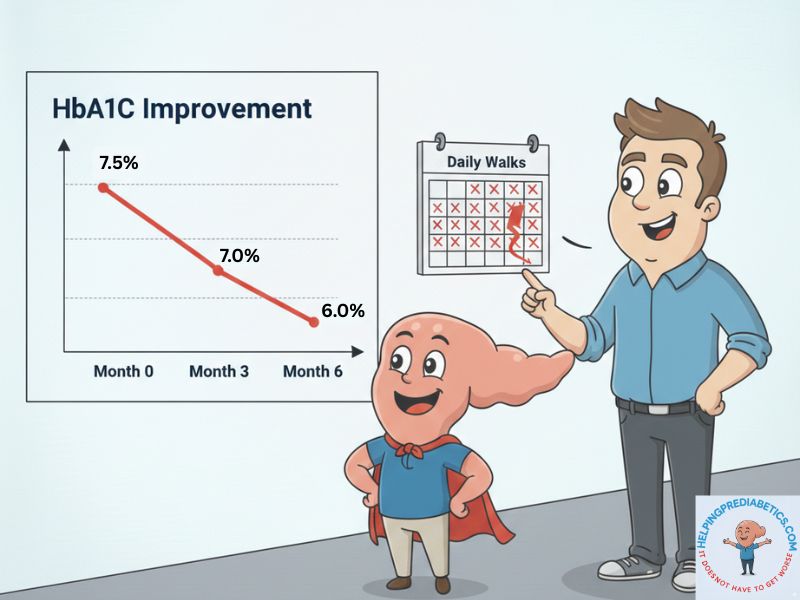
Post-meal walks prevent progression from prediabetes to Type 2 diabetes. This is your line in the sand—the intervention that stops the disease before it becomes permanent.
Target: 15 minutes after your largest meal daily. Track with a simple calendar X. Measure progress with blood work every 3-6 months.
You should see measurable HbA1c improvement within six months if you’re consistent.
If you’re also struggling with weight despite eating well, understand how insulin resistance causes weight gain and why traditional calorie restriction fails.
Post-Meal Walking for Type 2 Diabetes
Post-meal walking still works. Muscle glucose uptake functions regardless of diabetes diagnosis. You’re still pulling sugar from your blood mechanically.
Over time, consistent post-meal walking may reduce your medication needs. Some patients—with doctor supervision—reduce or eliminate diabetes medications as their blood sugar stabilizes.
Discuss medication adjustments with your doctor. Don’t change doses independently.
⚠️ IMPORTANT: If You’re Taking Diabetes Medication
If you take insulin or medications like glipizide (sulfonylureas), adding consistent post-meal exercise can lower your blood sugar too much (hypoglycemia). This is a GOOD problem—it means the walking is working—but it requires medication adjustment.
Do NOT skip your walks. Instead, talk to your doctor about reducing your medication doses as you build this habit. Your doctor needs to know you’re walking after meals so they can adjust your prescriptions accordingly.
If You’re Just Preventing
Post-meal walks are insurance. If you have family history of diabetes, if you’re overweight, if you’re over 40—walking after meals protects you before symptoms appear.
Build the habit now. Reap the benefits for decades.
Start Walking After Eating Tomorrow
Walking after eating is one of the simplest, most effective tools for blood sugar control. No equipment. Zero gym membership. No special training.
Just timing.
Fifteen to thirty minutes after your meal, start walking. Around your block. Through your office building. In the mall. The location doesn’t matter. The timing does.
Your next step: Tomorrow’s lunch break. Finish eating. Wait 15 minutes. Set a 15-minute timer. Walk. Return. Notice how you feel—likely more energized, clear-headed, and in control.
That’s it. That’s the intervention.
Small daily habit. Massive metabolic impact.
Medical Disclaimer: This content is for educational purposes and not medical advice. Consult your doctor before starting new exercise routines, especially if you have existing health conditions or take medications that affect blood sugar.
References:
- Hashimoto, T., et al. (2025). Positive impact of a 10-min walk immediately after glucose intake on postprandial glucose levels. Scientific Reports. https://www.nature.com/articles/s41598-025-07312-y
- Pahra, D., et al. (2022). The Effects of Postprandial Walking on the Glucose Response after Meals with Different Characteristics. Nutrients. https://pubmed.ncbi.nlm.nih.gov/35268055/
- Reynolds, A. N., et al. (2016). Advice to walk after meals is more effective for lowering postprandial glycaemia in type 2 diabetes mellitus than advice that does not specify timing. Diabetologia. https://pubmed.ncbi.nlm.nih.gov/27747394/