
How do you build good habits that actually stick when you have prediabetes?
You know what you should do. Eat better. Move more. Sleep earlier. Manage stress.
However, the information isn’t the problem. You’ve read the articles. Watched the videos. Set the goals.
But two weeks later, you’re back to old patterns. Is it weakness? Lack of discipline? Are you just not trying hard enough?
No. You’re trying to build good habits in environments designed for bad ones.
Medical Disclaimer: This content is for educational purposes and is not medical advice. I’m a licensed pharmacist sharing what I’ve observed over 18 years, but everyone’s situation is different. Consult your doctor before making significant lifestyle changes, especially if you have prediabetes or other health conditions.
Why Building Good Habits Feels Impossible (And What Actually Works)
Here’s what no one tells you: You’re not weak. You’re programmed.
Every choice you make happens in an environment. In fact, that environment is either making good habits easy or making them feel like a daily battle against yourself.
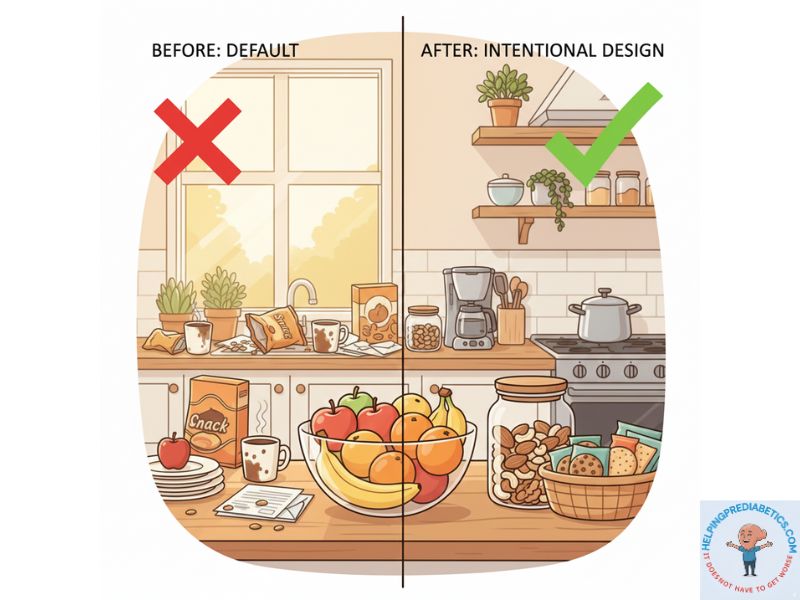
Right now, your kitchen is designed. Your office is designed. Your bedroom is designed. But not by you—by default. By whoever lived there before you. And by whoever stocked the cupboards last week. By the furniture placement you inherited and never questioned.
And those designs are making decisions for you.
When the biscuits are on the counter at eye level, you eat biscuits. Also, when the running shoes are buried in the cupboard, you don’t run. When your phone is next to your bed, you scroll instead of sleep.
You think you’re making choices. But you’re following paths of least resistance that were built into your space before you even woke up this morning.
As a pharmacist, I’ve watched this for 18 years: people trying to build good habits through willpower alone. White knuckling their way through Monday. Failing by Wednesday. Blaming themselves by Friday.
Willpower isn’t the answer. Environment design is.
You can’t build good habits by fighting your space. You build them by redesigning your space so the good choice becomes the automatic choice.
How Your Environment Controls Whether You Build Good Habits
Think about the last time you walked into a Woolies or Pick n Pay.
Where’s the fresh produce? Typically, it’s at the front of the store, right at the entrance.
Where’s the bread? Back corner, forcing you to walk past everything else.
Where are the sweets and chips? Eye level. Checkout aisle. Everywhere you look.
That’s not an accident. Instead, that’s intentional environment design.
The store isn’t relying on your willpower to buy vegetables. It’s making vegetables the first thing you see. The easiest thing to grab. The path of least resistance.
Now look at your kitchen.
What’s at eye level when you open the cupboard? And on the counter when you walk in hungry after work? What’s in the front of the fridge?
If it’s the leftover koeksisters from Sunday, the packet of chips, the box of crackers—then your environment is designed for those to be your default choices.
You’re not failing at willpower. You’re succeeding at following the design.
The question isn’t ‘How do I get more disciplined?’ The question is: “How do I build good habits by redesigning my space so the good choice is the easy choice?“
How to Build Good Habits by Redesigning Your Environment
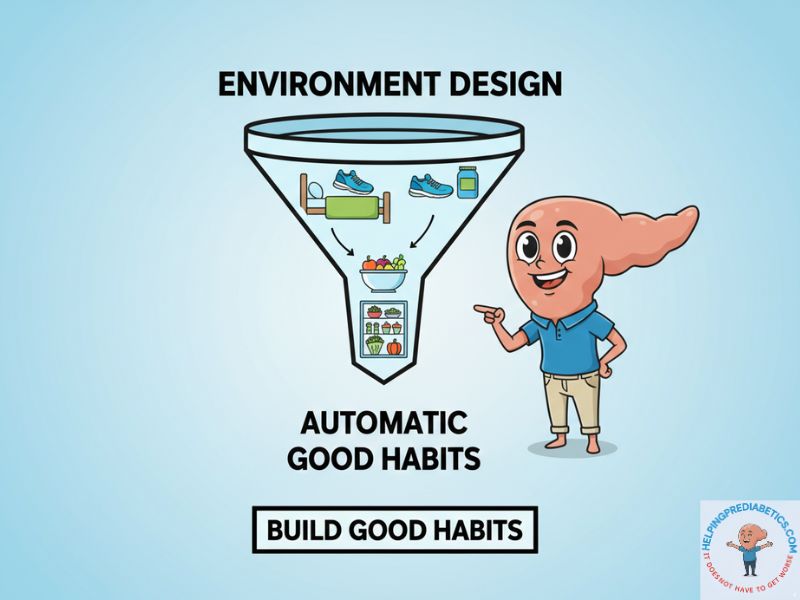
Here’s the framework: You can only change what you can control. Build yourself a funnel to guide you toward your goal.
A funnel makes one direction easier than all the others. Water doesn’t choose where to flow—it follows the path of least resistance. You’re the same.
When you build good habits, you’re not fighting yourself. You’re designing funnels.
Step 1: Make Desired Behaviors Visible
The rule: What you see first is what you do first.
If you want to drink more water, put a full bottle on your desk before you sit down to work. Not in the kitchen. Not “I’ll get it later.” On. The. Desk.
If you want to take your prediabetes medication consistently, put the pill bottle next to your coffee mug. You’ll see it when you make coffee. You’ll take it automatically.
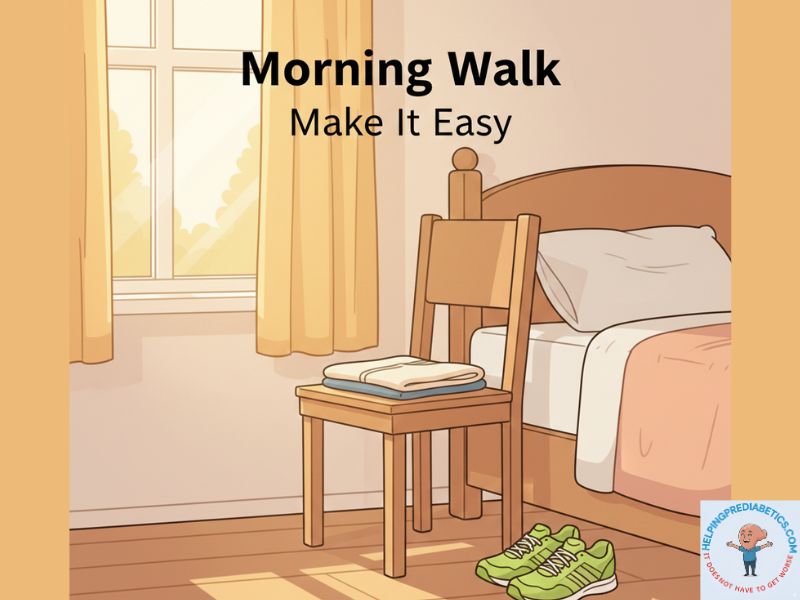
If you want to eat more vegetables, prep them on Sunday and put them at eye level in the fridge. Not in the crisper drawer. Eye level. First thing you see when you open the door. Not sure which foods support blood sugar best? Check out my Foods to Reverse Prediabetes: A Pharmacist’s Guide.
Example: You want to pack a healthy lunch for work instead of buying a gatsby at the garage. Solution? Put the lunchbox on the counter the night before, already packed. In the morning you don’t have to decide—you just grab it on the way out.
Step 2: Remove Obstacles to Good Habits
Every extra step between you and the good habit is a decision point. And every decision point is a place where you can give up.
Remove the steps.
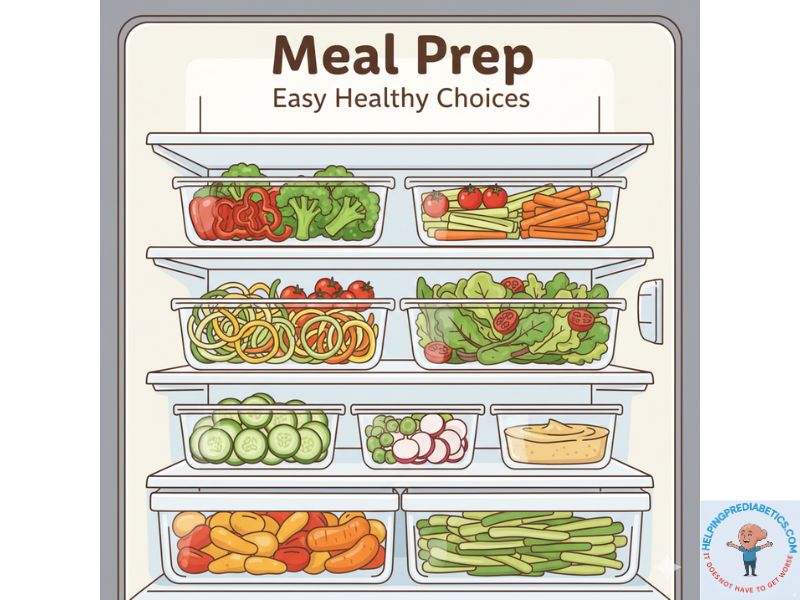
Want to walk in the mornings? Put your shoes next to the bed. Put your clothes on the chair. When you wake up, you’re already halfway dressed. No decisions required.
Want to cook dinner instead of ordering Uber Eats? Defrost the chicken the night before. Chop the vegetables on Sunday. Make the first three steps already done. By the time you’re home from work, you’re just assembling, not starting from scratch.
Want to check your blood sugar consistently? Keep the glucometer on the bathroom counter, not in a drawer. Keep the test strips next to it, not in a different room. Make the action take five seconds, not five minutes.
The fewer obstacles, the less willpower required.
Step 3: Add Obstacles to Bad Habits
This works in reverse too.
If you want to stop mindless snacking at night, don’t keep chips in the house. Not “I’ll use willpower to resist them.” Just don’t buy them.
If you want to stop scrolling on your phone before bed, charge it in another room. Not “I’ll be disciplined and put it down.” Remove it from the space entirely.
If you want to stop buying takeaways every day, delete the Uber Eats app. Make the bad habit require extra steps. Extra thought. Extra effort.
You’re not fighting yourself. You’re making the bad choice harder to access.
Step 4: Design Default Actions
This is the most powerful one.
A default action is what happens when you don’t think. When you’re tired. IF you’re stressed. When you’re on autopilot.
Current defaults → Redesigned defaults:
❌ Old default: Come home from work → you collapse on couch → order takeaway
✅ New default: Come home from work → you change into gym clothes (already laid out on bed) → 10-minute walk around block → then sit down
❌ When stressed, the old pattern: Open cupboard → eat whatever’s easiest
✅ New default: Feel stressed → drink water (bottle on desk) → step outside for two minutes → then reassess
❌ Tired mornings used to mean: Hit snooze → skip morning walk
✅ Now the default is: Wake up tired → shoes next to bed → walk to front gate and back → reassess energy from there
You’re not asking tired-you or stressed-you to make good decisions. You’re designing the space so the good decision is already made.
How to Build Good Habits When You Feel Weak: The Accountability Shift
Here’s the uncomfortable truth: Admitting weakness gives you power.
You’re weak in the evenings when you’re tired. Weak at 3pm when blood sugar crashes. You’re weak on Fridays after a long work week.
That’s not failure. That’s biology.
The mistake isn’t being weak. The mistake is pretending you’re not weak and then relying on willpower to save you in your weakest moments.
Think of it this way: Acknowledge the weakness. Plan for it. Design around it.
You know you’re weak at night? Don’t keep junk food in the house. Late-night cravings aren’t random—here’s why you crave sugar at night and what’s really happening with your cortisol.
You know you’re weak when stressed? Build a 5-minute stress reset that doesn’t involve food (walk outside, cold water on face, five deep breaths).
You know you’re weak when tired? Prep tomorrow’s good choices tonight when you still have energy.
You’re not fighting weakness. You’re designing for it.
And here’s what changes: when you stop blaming yourself for being weak, you start taking accountability for building systems that work with your weakness instead of against it.
Accountability isn’t “I should be stronger.” Accountability is “I know I’m weak here, so I’m going to design this differently.”
How to Build Good Habits for Prediabetes: Practical Steps
Now, let’s apply this accountability mindset directly to managing prediabetes.
You have prediabetes. You know you need to change how you eat, move, and manage stress.
Here’s how to build good habits using environment design:
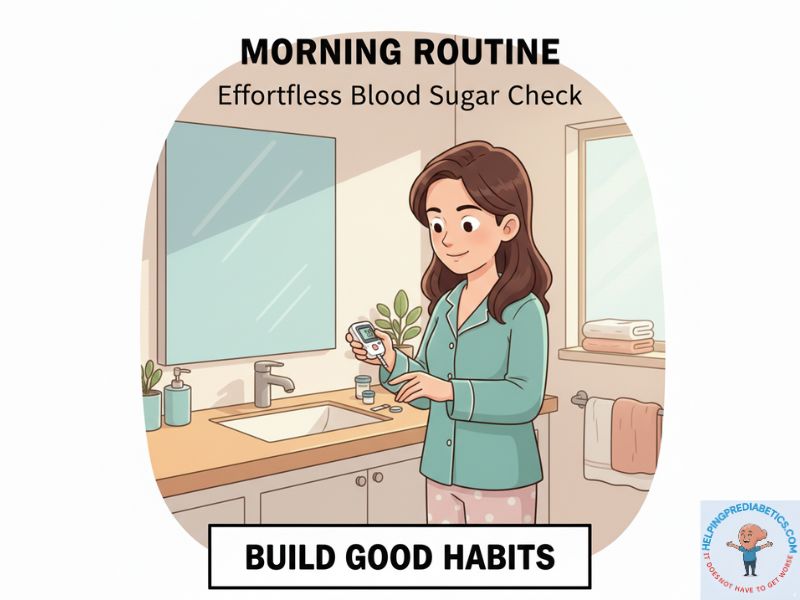
Blood sugar control:
- Visible: Keep a list of blood-sugar-friendly snacks on the fridge (biltong, nuts, boiled eggs, cheese). When you’re hungry and don’t want to think, you read the list and pick something. Understanding what insulin does to your body helps explain why these food choices matter.
- Remove obstacles: Prep vegetables on Sunday so weeknight cooking is just assembly, not a project.
- Add obstacles: Don’t buy cold drinks. Not “I’ll resist them.” Just don’t buy them. Make the bad choice require a trip to the shop instead of a trip to the fridge.
- Default action: Come home from work → drink water first (bottle on counter) → then decide what to eat.
Movement:
- Visible: Shoes next to the bed. Gym clothes on the chair.
- Remove obstacles: Find the walking route that requires the least decision-making (around the block, to the corner, same path every day). Even just walking after eating for 15 minutes can significantly lower blood sugar—no gym required.
- Add obstacles: Park further from the office entrance. Take stairs, not lift (if building allows).
- Default action: Morning routine = shoes on, walk to gate, reassess from there. (Most days, you’ll keep walking once you’ve started.)
Stress management:
- Visible: Sticky note on bathroom mirror: “3 deep breaths before you leave.”
- Remove obstacles: Pre-decide the 5-minute reset (walk outside, cold water, deep breathing—pick one, same one every time). Stress impacts blood sugar more than most people realize—learn how stress affects blood sugar and why managing it matters for reversal.
- Add obstacles: Phone charges in another room at night. Social media apps deleted from home screen.
- Default action: Feel stressed → water first, outside second, reassess third.
This isn’t about perfection. It’s about designing your space so the supportive choice is the automatic choice.
You won’t do it perfectly. You’ll forget. Even skip days. You’ll fall back into old patterns.
That’s part of the process.
The difference is: when you fall, you’re not falling because you’re weak. You’re falling because the funnel needs adjustment. So you adjust it. Add one more environmental cue. Remove one more obstacle. Redesign one more default.
You’re not becoming a different person. You’re becoming a person who designs environments that support the life you’re building.
Why Learning How to Build Good Habits Works When Willpower Fails
Willpower is a finite resource. You have a limited amount of it every day.
Every decision drains it. Moreover, every temptation resisted drains it. By evening, you’re running on empty.
Environment design doesn’t drain willpower. It removes the need for it.
When the good choice is the easy choice, you don’t have to resist anything. You just follow the path that’s already there.
When the bad choice requires extra steps, you don’t have to fight yourself. The friction does the work for you.
When your defaults are designed, you don’t have to think. You just move.
The science backs this up: studies on habit formation show that environmental cues are more powerful than motivation.
People who learn how to build good habits through environment design succeed where willpower fails. People who rely on willpower alone burn out.
You’ve probably experienced this already. Every January, you set goals. And every February, you’re back to old patterns. Not because you’re weak—because you’re trying to change behavior without changing environment.
This time, change the environment first. Then, the behavior follows.
How to Build Good Habits Starting Tomorrow
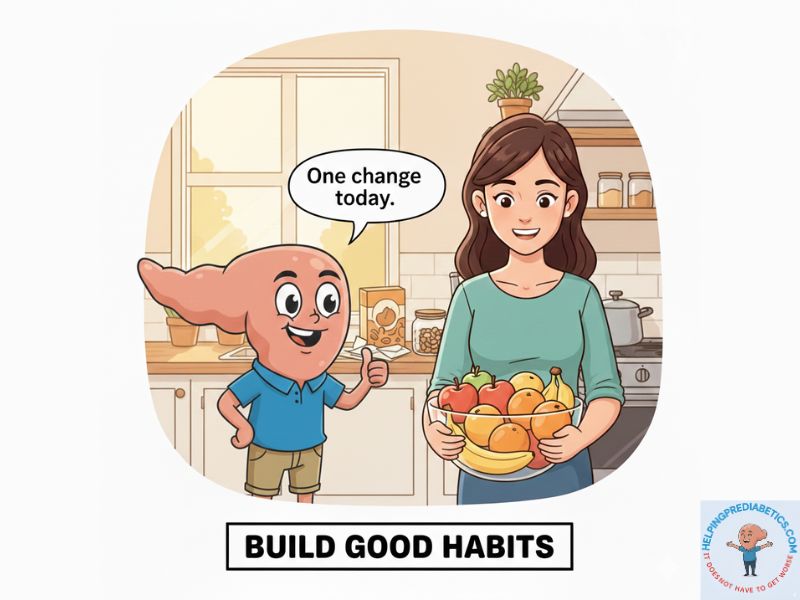
Pick ONE environmental change. Not five. Just One.
Maybe it’s:
- Fruit bowl on the counter instead of hidden in the fridge
- Running shoes next to the bed
- Water bottle on your desk before you start work
- Vegetables prepped on Sunday, eye level in the fridge
- Phone charging in another room at night
One small funnel towards your goal.
See what happens.
Most likely, the behavior becomes a little easier. A little more automatic. A little less dependent on how you feel that day.
Then next week, add another environmental change. Then another.
You’re not building good habits through willpower. You’re building good habits through better design.
The world is moving forward. Let’s keep moving too.
Ready to Take the Next Step?
Your Body Is Talking: A Pharmacist’s Guide to Stopping Prediabetes is a free guide that explains exactly what’s happening — and what to do about it. No meal plans. No shame. Just clarity.